

General
Top 5 Rolex Submariner References Ever Produced

Originally built as a tool watch for the Scuba diving niche, the Submariner has evolved significantly to transcend into other industries. Sports people, Hollywood celebrities, Hip-Hop stars, and even business people now wear the Submariner, all thanks to the many varieties of this timepiece that Rolex has rolled out over the years.
The Rolex Submariner is now 70 years old, which means there are now dozens of dozens of this iconic diver’s watch on the market. This makes the idea of picking the top five Submariner models almost impossible. It’s a subject that’ll likely spark a raging debate since people tend to have different opinions about what should be considered the best. Comparing the references based on Rolex Submariner price isn’t also very practical since prices tend to fluctuate based on various factors.
For this article, we have selected our top five Rolex Submariner references based on how interesting these models are and how significant they were to the evolution of the Submariner collection.
Submariner Ref. 6204
There’s no better way to start a list of the top Submariner timepieces than with the watch that started it all – the very first Submariner Ref 6204. While Rolex began making Submariner watches in 1953, the Ref 6204 was the first one officially presented to the public in 1954. The same year, Rolex also released the equally iconic Ref. 6200 (also known as the King Sub) and Ref. 6205.
The Ref. 6204’s claim to fame isn’t just the fact that it was the first Submariner to hit the market. It is also renowned for its impressive appearance and rugged utilitarian design. The 6204 had one of the simple dial layouts you’ll ever find on any Submariner timepiece.
Another impressive attribute of this timepiece is the emphasis on its practical design. The Submariner was intended to be a diver’s watch, and there was no better watch to introduce this idea to the general public than a timepiece built like an actual tool watch. It featured a modest 37mm case but was built to be water-resistant to a depth of 5.3mm.
The two versions of this Submariner timepiece were powered by the A260 and A296 automatic movements. The size of these calibers gave the watches a rounded shape. Consequently, the original Submariners were famously nicknamed the Bubble Back Subs, a nickname consistent with their maritime theme. The 6204 subs also featured a dive bezel with a diving scale but no hash marks like later models.
Submariner ref. 5512
The Ref. 5512 is an iconic Submariner reference because it was the first redesign of the Submariner collection. This new design was introduced in 1959, and the result was a Submariner that looked a lot like the modern version of the timepiece that people are familiar with today.
Some of the design updates implemented with Ref. 5512 include a size upgrade from the initial 37mm to a 40mm case. The watch also came with a bigger crown that measured 7mm and had crown guards. Rolex introduced beveled lugs and bezel inserts with the familiar hash marks with this reference. The ref. 5512 was in production until 1980, when Rolex eventually discontinued it.
This timepiece shares many physical similarities with the ref. 5513 timepiece, which was released around the same time. However, while the ref 5512 was chronometer-certified, the 5513 wasn’t. Consequently, Rolex added the famous “Superlative Chronometer / Officially Certified” text to the 5512 dial to differentiate both models. However, there are many versions of this reference without this text.
With so many variants of this timepiece produced between 1959 and 1980, Rolex used several movements in Ref. 5512. Some of the calibers used include Calibers 1530, 1560 and 1570. Today, the Submariner Ref 5512 is still considered one of the most important Submariner models because it created the template for the Submariner design that we have come to know and fall in love with.
Submariner 16610
The Rolex Submariner 16610 is one of the most recognizable vintage watches in the world. In fact, this timepiece is so popular that it is frequently counterfeited. The Ref 16610 was released in 1988 and remained in production until 2010, when it was eventually replaced by the Ref 116610.
Actor Timothy Dalton wore the Submariner Ref 16610 timepiece for the James Bond movie “License to Kill.” The timepiece also had some very peculiar design characteristics that made it quite remarkable in the Submariner lineup. For instance, this Submariner reference marks Rolex’s transition from acrylic glass to the Sapphire crystal that has become the standard feature on Rolex watches nowadays.
However, the main reason why the Ref 16610 deserves a place on this list is that it is considered a bridge between the vintage and modern eras of the Submariner. On a superficial level, it is the first Submariner with a five-digit reference number (instead of the four digits used in older timepieces).
More than just changing the naming convention, Rolex also demonstrated a real desire to make its dive watches into true luxury items with the Ref. 16610. It is a durable and sporty timepiece with a water resistance depth of up to 300 meters (one of the first with this spec). But it was also good enough to be worn to black tie events thanks to an updated date design, a wearable 40mm case size, and several recognizable quirks of the modern Submariner.
Submariner Ref. 1680
The Ref. 1680 is one of the most important Submariner models. It was introduced to the public in 1966, and its production lasted until 1979. This timepiece reference is famous for a lot of things, and that’s not just the fact that it debuted the date complication on the Submariner.
First, it is the only Submariner Date model to feature a bidirectional bezel. It is also the only date-displaying model with an acrylic crystal (instead of Sapphire). But the most notable fact of all is that this reference introduced the famous Cyclops magnifying lens on the data window for Rolex watches. This lens soon became a standard feature in many other Rolex watches (and timepieces from other watchmakers with a date feature.
The magnifying crystal on the original Ref. 1680 was quite prominent. In fact, it was so prominent that collectors gave it the nickname “Top Hat’ crystal” because it protruded up to 3mm above the case. Another nickname associated with this Submariner reference is “Red Sub.” It was called the Red Sub because a few series in the reference had the Submariner text printed in red.
Finally, this Submariner reference was the first to come in a precious metal. Rolex introduced a full-gold version of the Ref. 1680 in 1969. The full gold watch came in two versions: a black dial and bezel version and a blue dial and bezel version.
Submariner Ref. 5513
The Submariner 5513 was in production around the same time as the equally iconic reference 5512 mentioned earlier, and neither lived in the shadow of the other despite being nearly identical. One of the main differences between them is that the Submariner 5513 featured a movement that was non-chronometer-certified.
The Submariner Ref. 5513 is one of the famous Rolex Bond watches. This is the biggest claim to fame for this Submariner reference, which was worn by more than one James Bond character in different movies.
Roger More, who played Bond in Live and Let Die and The Man with the Golden Gun, wore the Submariner Ref 5513 in each of these movies. It was also one of two Rolex watches worn by George Lazenby in his outing as 007 On Her Majesty’s Secret Service.
The Submariner 5513 had some notable features that made it instantly recognizable. The most prominent feature was the pyramid-shaped shoulder (which was changed to rounded shoulders in later versions) to protect the winding mechanism. The ref. 5513 was the first Rolex timepiece to feature this crown protector.
Conclusion
With so many spectacular Submariner models, it’s difficult to narrow the list down to the top five. The references listed in this article are probably not the most expensive or even the most popular, but each one is iconic in its own right and represents important milestones in the collection’s evolution over the past seven decades. If you’re considering buying an Iconic Submariner for your collection, any of these references will be an excellent addition to the list.
Top 5 Rolex Models to Consider After Receiving a Bonus

When a bonus arrives after long effort, the Rolex Datejust 36 captures that moment well. Hard work pays off here; it feels right to treat yourself. Something special comes to mind, yet spending wisely matters too. Instead of quick pleasures, consider pairing joy with future-minded choices. Thought shifts naturally toward value that lasts beyond surprise checks.
Back in 1905, something shifted when Rolex emerged. Its pull comes from more than skillful design; it is tied to what came before. Wearing a Rolex amounts to carrying old values, creative genius, and exactness in the palm of your hand.
Fashion fads come and go, yet Rolex keeps staying in view. Timepieces such as the Rolex Datejust or Submariner still carry weight now just like before. Their pull draws those who hunt rarity alongside those building wealth through ownership. When markets dip, some investment paths open up easier. Maybe now is perfect – to choose a watch whose worth might climb later.
Could be the look draws you in, maybe the status symbol, or perhaps people think it holds value over time? This page shows the most sought‑after Rolex models people consider when money comes through unexpectedly.
Rolex Datejust 36
Back in 1945, out of nowhere came a watch that changed everything – the Rolex Datejust, the first automatic wristpiece with a date display. Window aside, it reshaped how people saw time worn on the wrist. Fast forward past seventy-five years, suddenly here stands the current model, called Datejust 36, still standing tall within Rolex’s lineup.
Perfection lives in how the Datejust 36 holds shape. Measure it at 36mm – just large enough to mean something, yet slips easily onto any wrist. Style flows without effort, carrying timeless grace like nothing else. A sharp fold under loose fabric carries just as well when dressed tight for town, or slipping into relaxed rooms. What sticks is how easily it fits whoever wears it – those who’ve gathered many, chase trends, or simply began wearing it.
From quiet beginnings, the Rolex Datejust changed slowly but surely across years, shaped by different setups. Often seen in stainless steel, it carries quiet elegance without fuss. Then there are the two-tone versions, called Rolesor, available in white, yellow, or rose gold blended with steel – bringing sharp sophistication. Pick a flat, fluted, or jeweled bezel – the look can shift entirely. Depending on how you lean toward clean lines or bold details, one of the Datejust 36s fits. Some prefer calm simplicity while others go for dramatic shine; each version stays true to its roots.
A Legacy of Innovation and Influence
Hard to think it, yet that date issue we’re used to having trouble with back then shocked people as much as anything new in 1945. The Datejust introduced a leapfrogging date display – no more scraping off digits each month – and flipped how timepieces looked forever. Suddenly showing numbers through a lens felt strange at first, but soon felt necessary when the Cyclops popped up. Back then, in the 1950s, a change came about because Hans Wilsdorf’s spouse found it hard to see the date. Now, showing the date clearly has become just like one of many key features of the Datejust – alongside its lasting beauty.
Beyond timepieces, the Datejust 36 carries weight as a symbol recognized worldwide. On leaders and stars alike it has rested, marking moments shaped by influence. After winning a record Wimbledon match in 2009, tennis star Roger Federer chose the Datejust for the occasion. A fitting match stood beside momentous history.
Collectible Appeal and Investment Value
The Datejust 36 is a watch that fits well with modern life. Its original price falls between roughly seven thousand and twenty-three hundred dollars. That keeps it within reach for many, even as it carries long-standing status and respect. Pick one you feel – a new model powered by the Caliber 3235, or something classic using parts that aren’t made anymore. Whichever path wins, it’s time with depth behind it, shaped by what came before and built to last longer than trends.
Rolex Day-Date
Built from dense 18k gold, the Rolex Day-Date carries a markable design. Not just for fans or fashion followers – it draws interest from those who follow their instincts too. Rumor has it: gold timepieces might soon appear more often on wrists, stepping into spotlight. That Day-Date carries itself – sharp, loud, yet built to last.
A Modern Classic with Investment Potential
Right now, stainless steel Rolex watches cost a fortune. Yet gold ones such as the ref. 18238 bring real worth today. Old-style versions still carry timeless design along with deep attraction. Gold bars, shaped by hand, keep their worth when handled like treasures.
A fresh twist comes through the ref. 118238. Instead of traditional designs, it wears gold bracelets paired with shiny metal rims. This mix brings current style sensibilities together under Rolex’s familiar calm. Right now, you can get it for about twenty-three hundred dollars less than new store versions on resale sites. Since gold costs stay steep, chances are this deal won’t last long.
The Day-Date II: Bold and Unique
Should you want something more overt, consider the Rolex Day-Date II. Its 41mm frame makes a clear statement. Made from 2008 to 2015, then briefly gone, now it quietly gains appeal among serious gatherers who notice such details.
A Symbol of Excellence
Packed with class, the Day-Date shows up in power meetings alongside luxury events. Today’s versions, think the Day-Date Puzzle Dial seen on Marcus Rashford, still carry weight beyond trends. Beyond watches, its presence lingers strong within mainstream awareness.
Rolex Submariner
At first, the Rolex Submariner existed to handle dives beyond 100 meters, built for underwater use. Its strength showed up just as much on solid ground, where rough handling tested it further.
One reason people still love the Submariner is that it goes with just about everything. Whether you’re wearing a crisp business outfit or something relaxed at home, it works. Not too loud, not too quiet – its size stays even across styles. The watch keeps calm, matching without effort. Nowhere else does glamour shine quite like it does among stars, players, and fashion figures – making this top-tier luxury timepiece stand out. Take Sean Connery, for instance, starring as Bond in the 1962 movie Dr. No. Beyond being built for depth and pressure, the Submariner carries weight beyond function. A must-have in style, it pulls eyes wherever it appears.
Lately, fans have been fixated on the return of two-tone Submariners. Take the Rolex 16613 – it lands in both stainless and 18k yellow gold. Its look blends steel and gold, offering a black or blue bezel and face depending on preference. A hint of the past shows through, yet everything feels fresh and made today. That mix draws people who care about history but still want something advanced. Instead of old-style construction, they get something built differently – more refined, less common.
For Collectors: Classic Proportions with Investment Appeal
Starting deep, the Submariner’s years unfold like layers. Each era pulls fans in different directions. Older versions – like the Rolex 16610, showing date – still spark fierce interest now. A dial here, a case there, they hum with vintage charm. Bezels made of aluminum mark their roots. Thinner silhouettes stand apart from later giants. This wasn’t yet the time of giant faces or bold updates. Could it be that old appeal, now priced to please your wallet? That lineup sits well above average, drawing buyers back time after time.
Today’s version, say the Rolex Submariner 126610, comes packed with fresh touches. Instead of old gear, it runs on the Caliber 3235 movement – smooth, quiet. Around the middle, a ceramic Cerachrom bezel adds toughness without looking tough. Bigger than before, measuring 41 millimeters across, yet still carries that clean, refined air. Strength shows up just as much as style does here. Fascinating how older watches – such as the 116610 – cost less today. Still, they bring almost the same qualities, especially appealing to those who collect timepieces.
The Submariner’s Enduring Investment Value
One thing about the Rolex Submariner. It holds its value well in the luxury watch world. Stainless steel sport designs keep pulling buyers in, which shows up in steady resale values. Meanwhile, those from decades ago are vanishing fast, making them harder to find. Built tough, the Submariner wears practicality like a badge while pulling rank in watchmaking lore. Maybe you see yourself with the sharp 6538 – no date, just clean lines like Bond wore back then. Or perhaps something newer, split by color like today’s high-end models. This isn’t just telling time; it’s buying into moments already faded into memory, slowly gaining value while waiting.
Rolex Sea-Dweller
Beyond the shine of the Rolex Submariner, the Rolex Sea-Dweller holds its own. Built for those who work beneath the waves, it carries a deeper purpose. Greater depth capability sets it apart, along with stronger mechanics and less common existence. You can find these traits just as often, if not more, when they surface trade circles. So it becomes a go-to option for collectors and investors.
Take ref. 1665 – this was Rolex’s initial timepiece featuring a helium release valve. Because of it, exploring ocean depths became possible in a whole new way, while reshaping what underwater watches could do. Not many exist, yet models such as the Double Red Sea-Dweller – hard to find – tend to sell for much higher than others. Still, the easier-to-find “Great White” from 1665 sticks in people’s minds like an old favorite toy.
Take the ref. 16660 – its rough 40mm case walks beside a stiff sapphire crystal, wrapped in aluminum bezels. Built like that, it handles serious underwater pressure without breaking the bank, launching near $11,000. Surprisingly light on wallet compared to what the Submariner asks.
A watch from the 116600 era (2014–2017) mixes old style with new design. This was the final 40mm Sea-Dweller without an adjustable repeater lens. At the same time, it became the initial model using a ceramic ring around the dial instead. Because they’re made in small numbers, these models collect serious value – their worth keeps going up over time.
A Rolex Sea-Dweller wears rough elegance, mixes smart tools with quiet wealth. Old models or new ones, these timepieces grab attention from serious fans only. Built on history, shaped by taste, holds steady over time. Hidden worth now begins to show.
Rolex Oyster Perpetual
Back in 2020, something quiet happened with the Rolex Oyster Perpetual – it stopped shouting and just looked right. Not new, but suddenly everyone noticed how little it promised. Its age dates back years, yet here it was, unpolished and still drawing eyes. Clean lines do that sometimes. Timelessness isn’t always loud.
A fresh start in 2020 brought lively dial shades – think turquoise, coral red, and warm yellow. These bright picks gave the timepiece a lively twist while keeping its roots intact. Kicking things off, the 41mm ref. One moment changes everything: 124300 arrives, then the refreshed 36mm model, ref. 126000, steps in – both reshaping what came before. Suddenly, it’s impossible to ignore; people who collect watches, those drawn to style – they both reach for it without hesitation. Take Jake Paul – seen flying in a bright blue jet – he isn’t helping silence around the plane grow. Fame like his just makes it catch more eyes.
Strong Investment Potential
When people want them more, colorful watches cost between 50% and 150% extra than their usual price if found in open market. A good example is the 39mm model ref. 114300 (made from 2015 to 2020), which now gives strong value to those who collect timepieces. Nowhere is the upward trend clearer than in its growing price, thanks to a small ideal case size and low output levels.
Faster times come without high prices when choosing earlier Rolex models. Their strong look goes hand in hand with tough movement power. Wide lug designs bring a rugged touch, which draws fans who like active styles.
Conclusion
Watches such as the Rolex Datejust 36, Submariner, Oyster Perpetual, Day-Date, and Sea-Dweller stand far above mere luxury items. They carry weight – not just in price but in how they’ve become part of culture, symbolizing taste and longevity. Every design brings its own character to the table. These aren’t just worn – they’re recognized. A fan of fine timepieces wanting to grow a personal collection. Or perhaps expand a watch collection with real value. These Rolex pieces stand out through precise design and lasting elegance. Lately, interest has climbed along with market attention. Buying now isn’t just about owning – it’s shaping something lasting.
The Best Gifts for Students
Choosing the perfect gift for a student can be both fun and a little tricky. It’s completely normal to be undecided when faced with so many diverse options. After all, each student’s interests and personality are unique. With personalized gifts becoming more popular, it’s no surprise that custom items are a great choice these days.
We’ve put together a list of nine thoughtful and budget-friendly gift ideas for students that are both creative and affordable.
Creative Gift Ideas for Students
Lapel Pins—Celebrate Student Excellence & Unique Qualities
Want to recognize a student’s standout qualities? GSJJ Lapel Pins are a great choice! Whether it’s applauding the ‘math genius’ in the class or giving a nod to the creative thinker with all the cool ideas, these small but stylish pins pack a big punch.

Personalized Pens—Practical Companions with a Personal Touch
A good pen is a student’s trusty companion throughout their school years. Just picture the excitement of getting a personalized pen—something made just for them. It’s the kind of gift that would brighten their entire day.
Custom Medallions—Honor Achievements with Meaningful Recognition
Go beyond a simple trophy with custom medallions. They’re both impressive and meaningful—making them ideal for graduation ceremonies, academic competitions, and victories in team sports. Adding personalized engraving makes the student feel truly recognized for their hard work.
Personalized Water Bottles—Stylish & Functional Daily Essentials
Water bottles are a popular gift option, but a customized one gives it a personal and meaningful twist.
Custom Keychains—Compact, Practical & Personalized Accessories
Custom keychains are both compact and practical—perfect for holding keys or decorating a backpack. You can even design one yourself, making it a gift that’s hard to go wrong with. After all, who can resist a keychain made just for them?
Stickers—Fun, Affordable & Personality-Boosting Decor
Stickers are fun and affordable—the easiest way to add personality to notebooks, laptops, and water bottles. You can customize all sorts of custom stickers, from student portrait designs to Harry Potter-themed ones…
Name Badges—Practical for Events & Memorable Keepsakes
Name badges are super practical for meetings or club events. They help everyone introduce themselves and break the ice with new people. And after the event, they make a nice keepsake to remember the day.
Custom Neon Signs—Stylish Room Personalization for Students
One of the coolest ideas out there. For students, Custom Neon Signs are the perfect way to personalize their room or gaming space, and they’re also a must-have when the holidays roll around.
Custom Lanyards—Organizational Solutions with Personal Flair
If you’ve got a student who’s always losing things, personalized lanyards are the perfect solution. Use it to organize small items like ID cards, keys, etc., and it’s especially convenient to take them out. With a custom design, it’s also easy to spot, so they won’t mix it up with anyone else’s stuff.
Briefly speaking, selecting an ideal present for students doesn’t need to be such a nerve-wracking chore. The key is finding something useful, memorable, and that really suits their style.
If you’re not sure where to find a good place for custom gifts, I’d definitely recommend GSJJ. They offer a great selection of personalized gifts, ranging from fine engraving to fun, colorful designs that perfectly match both your thoughtfulness and the student’s personality.
Supporting Families with Flexible Care Options in Cleburne, TX
When Life Changes, Care Needs to Flex
Most families don’t start out looking for “care options.” They start out trying to solve Tuesday.
Tuesday is the day Dad insists he’s fine, but he’s been wearing the same shirt for two days. Tuesday is the day Grandma forgets she already took her pills. Tuesday is the day your phone rings while you’re at work, and you can tell by the silence on the other end that something’s off. Nothing dramatic… just enough to make your shoulders tense up.
If you’re exploring In-Home Care in Cleburne TX, chances are you’re not shopping for a perfect plan. You’re hunting for something workable—something that fits your family’s rhythm without turning everyone’s life upside down. And that’s exactly where flexibility matters. Because aging isn’t linear. Needs change. Some weeks are stable. Some weeks are a mess. And forcing a rigid schedule onto a flexible reality is how families end up exhausted, resentful, and still worried.
Here’s the good news: flexible home support isn’t a vague promise. Done right, it’s a practical system that can shift with real life—more hours during recovery, fewer hours when things are smooth, specific help during “pinch points” like mornings or evenings, and respite that gives family caregivers an actual break (not just a five-minute breather).
Also, let’s say the quiet part out loud: flexibility isn’t only for the senior. It’s for the entire family. You may be coordinating siblings, kids, work, and a dozen small responsibilities that don’t show up on a calendar until they explode. Professional support can reduce that “always on alert” feeling by creating a routine that holds—even when the week doesn’t.

Photo by Freepik
In this article, we’ll walk through what flexible in-home support can look like in Cleburne, how it helps seniors maintain independence, and how it gives families the one thing they’re really craving: peace of mind that isn’t based on luck.
Why Flexibility Matters for Cleburne Families
Aging at home is often described as aging in place, but that phrase can sound like a policy document. In real life, it means: “Can we keep Mom safe in the house she loves, without turning the house into a constant emergency scene?” It means routines that still feel familiar. It means help that doesn’t bulldoze dignity. It means fewer scary surprises.
Flexibility is the difference between a plan that looks good on paper and a plan that survives real life.
Here’s why: seniors don’t have consistent days. Pain fluctuates. Energy dips. Appetite changes. Sleep can get weird. Memory can be sharp one day and foggy the next. Even medication side effects can come and go depending on hydration, meals, and stress. When needs vary, support needs to be adjustable—not because families are “indecisive,” but because life is honest.
Flexibility also matters because families have constraints, too:
- Work schedules that don’t line up neatly with caregiving needs
- Long drives between households (especially if family is spread across the DFW area)
- Kids’ schedules, school events, and life obligations that don’t pause
- Sibling dynamics where one person ends up doing most of the work by default
A rigid plan can create resentment quickly. “Why am I always the one leaving work early?” “Why does it fall on me when there’s a problem?” Flexibility—real flexibility—helps distribute the load and reduce crisis-level decisions.
And there’s a psychological benefit: when care is flexible, families stop thinking in extremes. It’s not “either we do everything ourselves or we move them out.” Instead, it becomes a dial you can turn. Two mornings a week becomes four during recovery, then back to two. A short evening visit becomes overnight coverage temporarily. That dial is how families stay steady over the long haul.
Real Life Doesn’t Run on Office Hours
If caregiving needs only happened from 9 to 5, a lot of families would be fine. But life has a funny habit of getting complicated at the least convenient times—early mornings, late evenings, weekends, and “right when you’re in the middle of something.”
The tricky moments tend to cluster around routines:
- Morning bathroom trips and showering (high fall risk, low energy)
- Meal times (appetite issues, fatigue, nutrition gaps)
- Evening confusion (when memory issues feel worse)
- Medication timing (especially when multiple meds are involved)
- Nighttime wake-ups (wandering risk, falls, anxiety)
That’s why flexibility isn’t only about “how many hours.” It’s about when the hours land. Two hours at the right time can be more valuable than six hours at the wrong time.
It’s also why families often feel stuck. They may be able to help sometimes—but not during the exact windows that matter most. Professional in-home support can fill those windows: a consistent morning routine, an evening check-in, or weekend respite that lets the family reset.
And here’s a subtle point: flexibility can reduce friction with the senior, too. Seniors often resist help that feels intrusive (“Why are you here all day?”) but accept help that feels targeted (“Oh, you’re helping with breakfast and shower time.”). Targeted support can feel like assistance, not supervision.
The Good-Day / Tough-Day Pattern
If you’ve been supporting an older loved one for any length of time, you’ve seen this pattern: the “good day” convinces everyone that things are fine… and then a “tough day” reminds you why you were worried in the first place.
On a good day, Dad is upbeat. He makes coffee. He cracks jokes. He seems steady. You think, “Maybe we’re overthinking it.” On a tough day, he’s dizzy when he stands, forgets lunch, and insists he already took his meds when the pill organizer says otherwise. Same person. Same home. Totally different risk level.
This is where flexible care shines, because it isn’t built on the fantasy of consistency. It’s built on the reality of variability.
A flexible plan can include:
- A baseline schedule that keeps routines stable
- “Add-on” hours that can be activated during setbacks (illness, recovery, grief, flare-ups)
- Options for weekend coverage when family caregivers need rest
- Shorter “check-in” visits during stable stretches to keep eyes on the situation
Families often feel relieved just knowing they can adjust without starting over. When needs change, you don’t want to renegotiate your entire life. You want to tweak the plan and move on.
That’s what flexibility gives you: fewer dramatic pivots, more smooth course-corrections. Like steering a car—small turns early prevent big swerves later.
What Flexible Home Support Can Include
In-home support isn’t one service—it’s more like a toolbelt. You don’t need every tool every day. You need the right tools for the job in front of you. Flexibility means you can choose the tools that matter now, then swap them later as life changes.
A strong care plan usually covers both:
- The basics that keep life functioning (meals, hygiene, mobility, home upkeep)
- The softer needs that keep life worth living (companionship, routine, dignity, calm)
This is where the idea of activities of daily living becomes useful. ADLs are the fundamentals—bathing, dressing, toileting, eating, transferring, and mobility. When ADLs become hard, quality of life shrinks quickly. Flexible care helps by supporting the specific ADLs that are shaky, without taking over the ones the senior can still do.
At the same time, families often need help with “life management” tasks—errands, laundry, light housekeeping, transportation, meal prep, and reminders. These aren’t dramatic medical tasks, but they are exactly the tasks that keep the home stable. When they slip, everything feels harder.
Flexibility also means customizing intensity. Some seniors need gentle support and companionship. Others need hands-on help with transfers, bathing safety, and frequent monitoring. Many shift between those two categories across the year.
And here’s a practical truth: the best flexible plans are built around stress points, not wishful thinking. You don’t plan for the senior’s best day. You plan for the day that tends to go sideways—and you build enough structure that sideways doesn’t become dangerous.
A Mix-and-Match Menu of Services
Flexible care options usually include a blend of services that can be scheduled in different ways. Here’s what families often mix and match:
Personal care support
- Help with bathing, dressing, grooming, toileting
- Safe transfers (bed to chair, chair to toilet)
- Mobility assistance and fall-risk reduction routines
Home support
- Light housekeeping (tidying, dishes, laundry, changing linens)
- Meal prep and grocery support
- Hydration reminders and snack setup
- Organization systems that reduce clutter and confusion
Companionship and routine support
- Conversation and presence (especially for isolated seniors)
- Help with hobbies, simple activities, walks, and community connection
- Gentle structure to prevent long unplanned naps, missed meals, or “lost afternoons”
Errands and appointments
- Transportation and accompaniment (help getting in/out of the car, navigating the appointment)
- Pharmacy runs and refill coordination
- Grocery shopping with the senior or on their behalf
What makes this “flexible” isn’t the list. It’s the way the list can be assembled into a plan that fits the home and the family. Maybe your loved one doesn’t need bathing help—but does need meal support and an evening check-in. Maybe they’re fine during the day, but nighttime is the concern. Flexibility lets you build around reality.
It also supports dignity. Seniors don’t want strangers doing everything. Most want help in specific areas, delivered respectfully, with as little disruption as possible. A mix-and-match approach helps keep care feeling normal.
Care Schedules Explained

Photo by Freepik
When families think about care schedules, they often picture only two options: “a few hours” or “full-time.” In reality, schedules can be tailored almost like Lego blocks—stacked, shifted, and resized.
Common schedule styles include:
- Short check-ins (to reinforce routines and safety)
- Morning support blocks (hygiene, breakfast, meds, safe mobility)
- Evening support blocks (dinner, meds, bedtime routine, calm structure)
- Split shifts (morning + evening, with family covering midday)
- Overnight support (for falls, wandering, or nighttime confusion)
The best schedule is the one that reduces the most risk with the least disruption. For many families, mornings and evenings are the “high-value” windows. That’s where falls happen, meals get skipped, medications are missed, and confusion spikes.
Another key piece: flexibility means the schedule can change seasonally or situationally. After a hospital stay, you might increase hours temporarily. During stable months, you might scale back to maintenance. That ability to scale is what keeps families from feeling trapped by their own plan.
Table: Common Care Options and Who They Fit
| Care Option | Best For | What It Helps With | Why It Feels “Flexible” |
| Hourly / Part-Time | Seniors mostly independent | Meals, light housekeeping, errands, companionship | Easy to add/remove hours as needs change |
| Morning Routine Blocks | Fall risk, slow mornings | Bathing safety, breakfast, meds, dressing | Targets the most fragile part of the day |
| Evening Check-Ins | Confusion at night, missed dinner | Dinner, meds, bedtime structure | Prevents “end-of-day” spirals |
| Overnight Support | Wandering risk, nighttime falls | Supervision, bathroom trips, reassurance | Covers the hours families can’t safely cover |
| Short-Term Recovery Care | Post-surgery or illness | Mobility support, routine rebuilding | Scales up temporarily, then steps down |
| Respite Care | Family caregiver fatigue | Coverage while family rests/works | Planned relief without emergencies |
This isn’t about choosing “the perfect category.” It’s about choosing what makes your family’s week run smoother—then adjusting without shame when life changes.
Mobility Help That Keeps Independence Intact
Mobility changes are often the first thing families notice—and the first thing that triggers worry. Not because walking slower is scary, but because falls are scary. A fall can change everything: confidence, activity level, and sometimes the ability to stay home.
Understanding a fall (accident) as a preventable risk event (not a random “oops”) is important. Most falls have patterns: rushing, clutter, low lighting, slippery floors, dizziness from dehydration, or unstable transfers from chairs and beds. When you find the pattern, you can reduce the risk.
Mobility support in the home isn’t about hovering or restricting movement. The best mobility support does the opposite—it helps seniors move more safely, so they’re less likely to self-limit out of fear. Because when seniors move less, they get weaker. And weakness increases fall risk again. That loop is brutal.
Flexible care can target mobility at the moments that matter most:
- Getting out of bed safely
- Bathroom routines (especially mornings and nights)
- Showering and dressing (slippery + awkward movements)
- Navigating steps, thresholds, and uneven pathways
- Leaving the house for appointments
A big advantage of professional support is technique. Safe transfers and steadier walking cues reduce risk without making the senior feel “handled.” Small coaching phrases can change outcomes: “Pause before you step,” “Let’s turn slowly,” “Hands on the chair arms first,” “Let’s take one breath before standing.”
When mobility is supported well, seniors feel capable again. And that feeling—capable—does more for independence than any motivational speech ever could.
Fall-Prevention Without Making Home Feel Restrictive
Fall prevention can sound like turning a home into a padded room. It doesn’t have to. In fact, the best fall prevention looks almost invisible—because it blends into the home and routine.
Practical, non-invasive strategies include:
- Keeping clear pathways from bedroom to bathroom
- Adding nightlights (especially in hallways and bathrooms)
- Removing loose throw rugs or securing them properly
- Keeping commonly used items at waist height (less reaching, less climbing)
- Ensuring footwear has grip (socks on slick floors are a gamble)
The routine side matters just as much:
- Building “pause points” into transitions (sit → stand → pause → walk)
- Scheduling showers at the time of day the senior is most steady
- Encouraging hydration earlier in the day to reduce dizziness
- Avoiding rushing by padding the schedule (rushing causes falls—period)
This is where flexibility helps. A senior might only need mobility support during high-risk moments, not all day. For example, a caregiver could assist with morning transfers and bathing, then step away while the senior enjoys the rest of the day independently.
That kind of targeted help often feels acceptable to seniors, because it doesn’t swallow their autonomy. It simply lowers the risk where risk is highest.
And families benefit too. When you know someone is there for the “danger zones,” you stop mentally replaying worst-case scenarios while you’re trying to focus on your own life.
Outings, Appointments, and Errands Made Easier
Independence isn’t only about what happens inside the house. It’s also about staying connected to the outside world: doctors’ visits, pharmacy runs, grocery shopping, haircuts, church, visiting friends. When getting out becomes hard, isolation creeps in—and isolation has its own health cost.
Flexible in-home support can include accompaniment for errands and appointments, which helps in ways families don’t always expect:
- Safe support getting in and out of the car
- A steady presence for balance in parking lots and sidewalks
- Help remembering appointment details and follow-up instructions
- Reduced stress for seniors who feel overwhelmed in busy environments
- Less worry for family members who can’t always take time off work
There’s also a pacing advantage. Families often rush appointments because of their schedule, not the senior’s stamina. A caregiver’s role can include building in rest breaks, hydration, and calmer transitions so the outing doesn’t wipe the senior out for two days.
And for many seniors, the emotional benefit is huge: leaving the house stops feeling like a dangerous expedition and starts feeling normal again. That normalcy supports confidence—and confidence supports mobility.
When flexibility is built in, the family can choose which outings need support and which don’t. Maybe the senior is fine for short errands but needs help for longer appointments. Maybe they prefer family for doctor visits but appreciate professional support for errands. The point is choice.
Memory and Medication Support That Feels Human

Photo by Freepik
Memory changes and medication complexity often arrive together—and they’re a stressful combination. A senior might forget whether they took a dose, forget why they walked into the kitchen, or feel embarrassed about confusion and try to hide it. Families may respond with repeated reminders, which can feel like nagging, which can lead to conflict. Nobody wins.
A flexible in-home plan can bring calm structure, especially when memory changes begin to affect safety. It’s not about labeling someone or jumping to conclusions. It’s about reducing risk and friction.
When memory issues are part of the picture, routine becomes a safety tool. Familiar sequences reduce cognitive load. Visual cues reduce confusion. Calm communication reduces stress—and stress can make memory worse, creating a feedback loop.
Families often learn about dementia as part of this journey, but regardless of diagnosis, the home approach often benefits from the same principles: simplify, cue, reassure, and repeat.
Medication support is equally important because medication errors can mimic memory decline: dizziness, confusion, fatigue, appetite changes. A senior who seems “off” may be experiencing side effects, dehydration, or inconsistent dosing. Structure helps you figure out what’s actually happening.
Memory-Friendly Routines and Communication
The biggest mistake families make with memory changes is trying to force the brain to behave like it used to. “Just remember.” “We talked about this.” “You already ate.” Those phrases feel logical, but they often increase frustration.
A more effective approach is to reduce the number of moments that require remembering in the first place:
- Keep essentials in the same place (keys, glasses, walker, remote)
- Use simple visual cues (calendar, note board, labeled drawers)
- Simplify choices (two options, not ten)
- Keep a predictable daily rhythm (wake → bathroom → breakfast → meds → activity)
Communication matters just as much:
- Use calm, short sentences
- Offer one instruction at a time
- Validate feelings before redirecting
- Avoid arguing over details that don’t matter for safety
Here’s a simple “connect before correct” pattern that saves a lot of conflict:
- Reassure: “You’re okay—let’s figure it out together.”
- Redirect: “Let’s check the pill organizer.” / “Let’s have a snack and then we’ll look.”
- Reset the routine: Return to the familiar next step
This works because confusion often feels scary. When people feel scared, they resist. When they feel safe, they cooperate.
Flexible care allows families to schedule memory support during the times it’s most needed—often late afternoon/evening, or around medications and meals—without imposing constant supervision.
Medication Systems That Reduce Mistakes
Medication support at home doesn’t have to feel clinical. It can be simple, consistent, and respectful. The goal is to reduce “mystery moments” like: “Did you take your pills?” “I think so.” “Are you sure?” “Stop asking me!”
A strong system includes:
- A daily anchor (meds paired with breakfast or dinner)
- A clear organizer (pill box, blister pack, or chart)
- A confirmation step (visual check, checklist, or caregiver note)
- Observation for side effects and pattern changes
This is especially important when polypharmacy is involved—multiple medications that increase complexity and interaction risk. Families don’t need to become pharmacists. But they do need predictable routines and good observation, so changes can be discussed with healthcare providers using real information, not guesses.
Flexible support can include:
- Medication reminders at the exact times the family can’t reliably cover
- Refill tracking so medications don’t run out unexpectedly
- Hydration and meal pairing to reduce stomach upset and dizziness
- Gentle check-ins that feel collaborative, not controlling
Checklist: Red Flags to Watch For
Medication or memory-related problems don’t always look obvious. Sometimes they show up as “small weirdness” that’s easy to brush off—until it repeats.
Here are red flags worth tracking (not panicking over—tracking):
- New dizziness, especially after standing
- Sudden sleepiness or “zoning out” at certain times of day
- Skipped meals or reduced appetite without explanation
- Increased confusion in the evening or after certain doses
- Unusual irritability that’s out of character
- New unsteadiness that wasn’t present last month
- Missed refills or pill bottles that don’t match expected usage
- Repeated bathroom urgency at night (rushing increases fall risk)
A simple tracking habit helps: write down what happened, when, and what was going on around it (food, hydration, sleep, new meds). Patterns are gold. Patterns are how you get ahead of problems.
And again—flexible in-home support helps because it adds consistent observation to the day. Families can’t be everywhere. A plan can.
Relief for Family Caregivers

Photo by Freepik
Even the most devoted family caregiver eventually hits a limit. Not because they don’t love their parent, but because caregiving is a full workload layered on top of an already-full life. It’s the errands, the phone calls, the supervision, the appointments… and the constant low-grade worry running in your head like background noise.
That chronic strain is real enough to have a name: caregiver burden. And it’s not just emotional. It affects sleep, health, work performance, relationships, and the ability to make good decisions. When caregivers burn out, everyone suffers—including the senior, because care becomes reactive and tense instead of calm and steady.
Flexible care options help because they can be built around the caregiver’s reality, not just the senior’s needs. Maybe you need coverage on weekdays during work hours. Maybe you need Saturday help so you can reset. Maybe you need someone else to handle bathing support so your relationship doesn’t become all chores and discomfort.
The goal isn’t to “hand off responsibility.” It’s to build a sustainable system. One that can last months and years—not just weeks.
Respite Planning and Burnout Prevention
Respite is the difference between coping and collapsing. And respite doesn’t have to mean a full weekend away or some dramatic change. It can be scheduled, practical coverage that gives caregivers predictable breathing room.
That’s exactly what respite care is meant to do: provide temporary relief so the caregiver can rest, work, attend appointments, or simply live.
Flexible respite can look like:
- Two mornings a week while you work uninterrupted
- An evening block so you can cook your own dinner, see friends, or sleep early
- Weekend coverage to prevent caregiving from consuming every day off
- Short-term increases after a hospitalization or illness
Here’s what makes respite actually work: predictability. If respite only happens when you’re desperate, your stress stays high. If respite is scheduled, your nervous system starts to relax because you know help is coming.
Another underrated benefit: professional support can handle the emotionally loaded tasks—bathing, toileting assistance, routine enforcement—so family time becomes more relational again. Less “did you take your meds?” and more “tell me about your day.”
How to Share the Load Among Siblings
Siblings often want to help… but help doesn’t automatically organize itself. Without a plan, the most available person becomes the default caregiver, and resentment grows quietly.
Here’s a simple way to distribute responsibilities fairly:
- Assign roles, not vague promises
- One sibling handles appointments
- One handles finances and paperwork
- One handles weekly grocery orders
- One handles provider communication
- Create one shared source of truth
- A group chat is okay, but a shared note or calendar is better
- Keep updated meds list, schedule, and key contacts in one place
- Agree on the “minimum viable plan”
- What must happen weekly no matter what?
- Meals? Med reminders? Bathing? Laundry? Check-ins?
- Use professional care to cover gaps
- If no sibling can cover mornings, schedule morning support
- If weekends are the breaking point, schedule respite
This approach isn’t about being rigid. It’s about preventing silent overload. Flexible care is often the glue that makes sibling plans realistic—because families don’t need more guilt, they need more structure.
Choosing a Provider and Building a Flexible Plan
Choosing a provider can feel intimidating because the stakes feel high. You’re not just hiring “help.” You’re choosing who will be in the home, how consistently they’ll show up, and whether the care will actually reduce stress or accidentally add more of it.
If you’re comparing options for In-Home Care in Cleburne, TX, focus on the operational realities that create peace of mind: reliability, communication, caregiver matching, and the ability to scale support up or down without drama.
A flexible plan should be built around:
- The senior’s routines and preferences (so care doesn’t feel intrusive)
- The highest-risk times of day (so support has maximum impact)
- The family’s schedule and capacity (so the system is sustainable)
Flexibility also means the plan can evolve. Needs will change. That’s normal. The right provider doesn’t shame families for adjusting. They expect it—and they make it easy.
Questions to Ask and Red Flags to Avoid
Here are questions that quickly reveal whether a provider is truly flexible or just using the word:
Questions to ask
- How do you build a care plan—do you ask about routines, preferences, and goals?
- Can we start with a small schedule and adjust as we learn what works?
- How do you handle last-minute changes or increasing needs?
- How do you match caregivers to clients (personality fit, language, comfort level)?
- What’s your backup plan if the scheduled caregiver can’t make it?
- How will our family receive updates or notes about how things are going?
Red flags
- Vague answers about coverage and communication
- One-size-fits-all packages with little interest in personal routines
- Pressure to commit to large hours immediately
- No clear process for caregiver matching or continuity
The provider doesn’t have to be perfect. But they should be transparent, organized, and responsive. That’s what families are really paying for: reliability.
Sample Flexible Weekly Plan for a Cleburne Senior
Here’s a realistic example of a flexible plan that supports independence while easing family stress. Imagine a senior who:
- Moves slower in the morning
- Sometimes forgets meals or hydration
- Needs help keeping the home manageable
- Has a family caregiver who works weekdays
Plan goals
- Stabilize mornings (highest fall risk + meds + meals)
- Prevent skipped meals and dehydration
- Keep the home safe (reduce clutter pathways)
- Provide caregiver relief without overcommitting
Sample schedule
- Mon/Wed/Fri mornings (2–3 hours): breakfast + medication routine + light housekeeping + quick safety scan
- Tue/Thu short check-in (1–2 hours): meal prep + hydration setup + companionship + errands/pharmacy run if needed
- Saturday respite block (3–4 hours): family gets true time off; senior gets support and connection
Table: What This Week Can Cover
| Day | Focus | Why It Helps | “Flexible” Lever |
| Mon/Wed/Fri AM | Morning routine + meals + meds | Prevents rushing, missed meds, skipped breakfast | Add hours temporarily during recovery |
| Tue/Thu | Meal prep + check-in | Reduces nutrition dips and isolation | Reduce to one day if stable |
| Sat | Respite + home reset | Protects caregiver energy and home safety | Swap to Sunday when family events shift |
This plan is intentionally not huge. It’s built to be sustainable. And that’s the point: a smaller plan that actually happens consistently beats a bigger plan that collapses.
How to Start Small and Scale Up
If you’re nervous about starting (totally normal), the simplest approach is:
- Start with the highest-risk window (often mornings)
- Run it for 2–4 weeks
- Track what improves (meals, steadiness, mood, fewer “weird incidents”)
- Add support only where the data says you need it
This approach feels less like “giving up independence” and more like “installing stability.” Providers like ameriCARE often fit best when they can build this kind of adjustable plan—start with the pressure points, then scale as needed without making the family renegotiate everything from scratch.
And yes, it’s okay if your plan changes. A flexible plan is supposed to change. That’s not failure. That’s responsiveness.
Peace of Mind Comes From a Plan That Works

Photo by Freepik
Families don’t gain peace of mind by pretending nothing will go wrong. They gain peace of mind by building a system that can handle real life—good days, tough days, last-minute changes, and everything in between.
Flexible in-home support helps seniors maintain independence because it supports the right moments without taking over the whole day. It reduces fall risk with practical routines. It stabilizes meals and medication habits without turning the home into a clinic. It keeps the house livable. It adds companionship that prevents isolation from quietly becoming the next crisis. And just as importantly, it protects family caregivers from burnout—the kind that sneaks up slowly, then hits all at once.
If you’re building your plan in Cleburne, remember the goal isn’t “more care.” The goal is better timed care. The hours that land at the right moments—morning routines, evening check-ins, weekend respite—often create the biggest improvements with the least disruption.
And if you decide to work with ameriCARE, treat support like a dial, not a switch. Start where your week is most fragile. Create consistency. Then adjust based on what you learn. That’s how families get something rare and precious: a home that still feels like home, and a care plan that doesn’t break when life gets messy.
FAQs
1) What makes care “flexible” instead of generic?
Flexible care adapts to real life: changing needs, changing schedules, and changing energy levels. It can mean targeted support during high-risk times (like mornings or nights), the ability to add hours during recovery, or respite options that protect family caregivers. Generic care tends to be one-size-fits-all and harder to adjust.
2) Can we start with a few hours a week and still see benefits?
Yes—if the hours are placed strategically. Many families see noticeable improvements by covering the “pressure points” first: morning routines, medication timing, meal prep, or evening structure. Consistency matters more than intensity at the beginning.
3) How do we know if a senior needs mobility-focused support?
Look for patterns: near-falls, unsteady transfers (chair/bed/toilet), fear of showering, shuffling gait, or increased reluctance to move around the home. Even if there hasn’t been a fall, repeated “almost” moments are a strong signal to add support.
4) What if my parent refuses help because they want independence?
That’s common. Start with help that feels less intrusive—meal prep, light housekeeping, errands, or companionship—then build trust. Frame support as “helping you stay independent” rather than “someone taking over.” Many seniors accept targeted support more readily than all-day supervision.
Everyday Assistance That Makes Aging Easier at Home in Torrance, CA
it’s a soft, coastal kind of morning in Torrance. The light comes in slow through the blinds, and the house is quiet except for the kettle. Your mom (or dad) is up—technically. But the day is already asking a lot.
They’re standing at the counter doing that “thinking pause” thing, trying to remember if the pills were taken or if they only meant to take them. The toaster pops. The phone rings. A calendar reminder flashes for an appointment they swear they never booked. And somewhere in the middle of all that, they tell you, “I’m fine.”
Here’s what families learn the hard way: “fine” can be a cover word. Not for dramatic reasons—more like a polite umbrella your parent holds over their pride while the little struggles drizzle down.

Photo by Freepik
And the little struggles are exactly where everyday assistance makes the biggest difference.
The “small struggles” families notice first
Most people don’t start by asking for full-time in-home care. They start by noticing:
-
The fridge is mostly condiments and leftovers… again.
-
Laundry piles up because stairs feel sketchy.
-
A “minor” slip in the bathroom turns into a bruise the size of a grapefruit.
-
The same story gets repeated, like the brain is buffering.
-
Driving becomes “I only go nearby,” then “I don’t go out much.”
These are not moral failings. They’re friction points—tiny daily obstacles that wear a person down.
Why waiting for a crisis is the expensive option
Families often wait for a clear, undeniable moment: a fall, a hospitalization, a scary phone call at 2 a.m. But when you wait for a crisis, your choices shrink. You’re forced to decide fast, stressed, and usually from a hospital chair.
Bringing in help earlier is less about “taking over” and more about protecting independence. Think of it like getting your car serviced before the engine light starts yelling at you. It’s not dramatic. It’s smart.
And if you’re researching Home care services seniors depend on in Torrance, CA, the goal isn’t to replace family love. It’s to add consistent support so your loved one can keep living at home—without every day feeling like a balancing act.
What “everyday assistance” actually looks like
When people hear “home care,” they sometimes imagine a medical setting in the living room. In reality, everyday assistance is often wonderfully normal. It’s the stuff you’d do for someone you love—just done consistently, safely, and without burning out the family.
A good way to frame it: everyday assistance helps with the basics of life, especially the things captured by Activities of daily living (ADLs). ADLs are the “regular human” tasks—bathing, dressing, eating, moving around—that become tougher with age, pain, or memory changes.
Companion support that keeps life social
This is the underrated one. Companion care can include:
-
Conversation and company (yes, it matters)
-
Walks around the block (or just out to the mailbox)
-
Playing cards, doing puzzles, sharing hobbies
-
Help with light meal prep
-
Gentle encouragement to stay engaged
Loneliness doesn’t always look like sadness. Sometimes it looks like sleeping too much, skipping meals, or watching TV all day because it’s easier than effort.
Personal care that protects dignity
Personal care is practical and private, and it can be life-changing:
-
Shower and bathing help
-
Grooming, oral care, dressing
-
Toileting and continence support
-
Mobility help in and out of bed or chairs
The key is dignity. The best caregivers don’t “do things to” someone. They support the person so they stay as independent as possible—while staying safe.
Light housekeeping that reduces risk
A cluttered home is a fall risk. A dusty home can aggravate breathing issues. A sink full of dishes can become a bug problem faster than anyone wants to admit.
Everyday assistance often includes:
-
Sweeping and tidying walkways
-
Laundry and linens
-
Trash removal
-
Simple kitchen cleanup
-
Changing bedding (a bigger task than it sounds)
Transportation, errands, and “the little stuff”
This is the stuff that quietly keeps seniors connected to life:
-
Grocery shopping and pharmacy runs
-
Rides to appointments
-
Picking up prescriptions
-
Walking into the clinic and keeping track of “what the doctor said”
If you’ve ever tried to coordinate errands in between work, traffic, and your own family schedule… you already know why this matters.
Mobility help: safer movement without feeling “handled”

Photo by Freepik
Mobility issues can creep in slowly. One day it’s “my knee is acting up,” and the next day it’s “I’ll just stay on the couch.” Less movement leads to less strength. Less strength leads to more falls. It’s a loop, and it can tighten fast.
A big part of quality senior care is helping someone move safely without making them feel like they’ve lost control.
Fall prevention habits that work in real homes
Falls aren’t rare—especially with age. But they’re not “just part of getting older,” either. If you want the bigger overview, Wikipedia’s page on falls explains why they’re such a serious issue.
Here are realistic fall-prevention habits that don’t feel like a lecture:
-
Clear the “walking lanes.” Remove throw rugs, cords, and clutter from hallways.
-
Light the path. Nightlights from bedroom to bathroom are a small change with huge payoff.
-
Shoes inside the house. Supportive footwear beats slippery socks every time.
-
Slow transitions. Standing up slowly reduces dizziness and “whoa” moments.
-
Hydration check. Dehydration can make balance worse (and it’s common).
Transfers, stairs, and walking support
“Transfers” is the fancy term for getting from one place to another: bed to chair, chair to toilet, car seat to standing.
A caregiver can help with:
-
Steadying without pulling
-
Using a walker correctly (many people don’t)
-
Practicing safe stair routines
-
Encouraging movement in small, doable chunks
Simple home tweaks that change everything
You don’t need a full remodel to make a home safer. Common upgrades include:
-
Grab bars in the shower and near the toilet
-
A shower chair and handheld showerhead
-
Non-slip mats and strips
-
Raised toilet seat (seriously underrated)
-
Removing the “decor rug that tries to kill everyone”
These small changes buy time, confidence, and freedom.
Memory support: calm structure for forgetful days
Memory support isn’t only for advanced dementia. Plenty of seniors have mild forgetfulness, medication confusion, or trouble keeping track of schedules.
And here’s the thing: memory challenges are exhausting. Imagine your brain misplacing things all day—names, dates, plans, steps in a recipe—then having someone ask, “How could you forget that?” It’s not helpful. It’s humiliating.
A caregiver’s job is to create calm structure, not conflict.
Gentle reminders vs. arguing
A good caregiver uses cues, not confrontation:
-
“Let’s check the calendar together.”
-
“Want to take your meds with breakfast like usual?”
-
“I’ll set the clothes out—pick what feels comfy.”
The tone matters. The goal isn’t proving someone wrong. The goal is helping them succeed.
If you’re noticing bigger cognitive changes, it can help to understand the basics of dementia—not to self-diagnose, but to recognize what’s normal forgetfulness versus a pattern that needs a doctor’s attention.
Wandering and home safety
Wandering doesn’t always look like leaving the house. It can be:
-
Opening the front door “just to look outside” and getting turned around
-
Going to the garage and forgetting why
-
Stepping out to get the mail and losing track of where they are
Caregivers can help by:
-
Creating predictable routines (less confusion)
-
Keeping keys in one safe spot
-
Using door chimes or simple alerts
-
Redirecting with kindness
Meaningful activities that keep seniors “lit up”
This is where care becomes more than tasks.
Good in-home support can include:
-
Short walks with conversation
-
Gardening, light cooking, organizing photos
-
Listening to favorite music, watching familiar shows together
-
Small creative projects
People don’t just need to be safe. They need to feel like themselves.
Medication support: the quiet hero behind better health
Medication mistakes are more common than families expect. It’s not always forgetting. Sometimes it’s confusion. Sometimes it’s “I already took it” when they didn’t. Sometimes it’s taking it twice because the day feels repetitive.
This is one reason home care services can make a noticeable difference quickly—because medication routines affect everything: blood pressure, balance, mood, sleep, appetite.
Medication reminders and routines
Everyday assistance can support medication routines by:
-
Setting up a simple pill organizer (daily or weekly)
-
Creating a consistent time cue (breakfast, evening tea, bedtime)
-
Watching for missed doses (without being bossy)
-
Writing down questions to ask the doctor
Refills, pharmacies, and keeping lists updated
A caregiver can also help with:
-
Refill reminders
-
Picking up prescriptions
-
Keeping a current medication list on the fridge
-
Tracking over-the-counter meds and supplements (the sneaky ones)
Common mistakes families don’t notice until it’s a problem
Here are a few real-world patterns that cause trouble:
-
Old bottles everywhere (no one knows which is current)
-
Multiple doctors prescribing without a full list shared
-
“As needed” meds taken too often
-
Side effects mistaken for aging (dizziness, confusion, fatigue)
A caregiver can’t replace medical advice, but they can be another set of eyes—someone who notices changes early and communicates them to the family.
How personalized in-home help improves quality of life

Photo by Freepik
Let’s talk about “quality of life,” because it can sound like a vague brochure phrase… until you’ve watched a loved one struggle.
Quality of life is simple:
-
Can they do what they enjoy?
-
Do they feel safe?
-
Do they feel respected?
-
Are they connected to people and routines that matter?
Personalized in-home care supports those basics.
Physical benefits
With consistent help, many seniors experience:
-
Fewer falls and “near-misses”
-
Better nutrition (real meals, more hydration)
-
Better hygiene (which reduces infections and skin issues)
-
More movement (which helps strength and mood)
Emotional benefits
This part is huge and often overlooked:
-
Less loneliness
-
Less anxiety about “what if something happens”
-
More confidence doing normal things again
-
More laughter (yes, it counts)
A trusted helper can turn a long day into a manageable one.
Family caregiver relief
Family caregivers carry a silent load: worry, guilt, planning, and constant mental math.
When a professional caregiver (see the broader role on Wikipedia: Caregiver) supports your loved one, your role shifts. You get to be a daughter, son, spouse, or friend again—not just the person who manages everything.
This is where providers like Always Best Care can be part of the picture—especially for families who want a structured care plan, consistent scheduling, and help matching the right caregiver to the right senior.
Why aging at home matters in the South Bay
Torrance isn’t just a dot on the map. It’s familiar grocery stores, neighbors, favorite parks, and “my chair by the window.” That familiarity matters, especially as mobility and memory change.
The idea of aging in place is simple: staying in your home safely, with the right support. And for many seniors, that’s the dream.
How to know it’s time to bring in support
If you’re unsure, try stepping away from emotion for a second and looking at patterns.
The 7-day check
For one week, keep a simple list:
-
Meals eaten (actual meals)
-
Meds taken correctly
-
Showers/hygiene
-
Laundry and clean clothes
-
Any falls, stumbles, dizziness
-
Mood (withdrawn, anxious, unusually angry)
-
Missed appointments or confusion about dates
If the list feels messy, inconsistent, or concerning—help is appropriate. Not because your parent is “failing,” but because the system needs support.
Red flags that mean “don’t wait”
-
Falls or frequent stumbles
-
Leaving the stove on
-
Missing medications repeatedly
-
Not bathing for long periods
-
Significant weight loss
-
Getting lost while driving or walking
Green flags that mean you’re choosing the right level of help
-
Your parent accepts assistance with one or two tasks
-
Routines become smoother
-
Mood improves (less frustration, more calm)
-
The home feels safer and more organized
-
Family stress drops noticeably
Choosing a home care provider in Torrance
This is where you want to be picky—in a good way. You’re not hiring a task list. You’re inviting someone into your loved one’s life.
Questions worth asking
Here are questions that actually matter:
-
How do you screen and train caregivers?
-
Can we adjust hours as needs change?
-
How do you handle caregiver replacements if it’s not a good fit?
-
What does communication with family look like?
-
Do you create a care plan or just show up?
How to match caregivers to personality and routine
Skills matter. But personality fit is the glue.
-
Quiet senior? Choose someone calm and steady.
-
Social senior? Choose someone warm and talkative.
-
Routine-driven senior? Choose someone consistent and punctual.
Costs, schedules, and flexibility

Photo by Freepik
Most families start with a few visits a week, then adjust. That’s normal. The goal is not “maximum care.” The goal is “right-sized care.”
If you’re looking for a provider that can build a flexible plan and scale it up or down, Always Best Care is one option families often explore—especially when they want professional coordination without making the home feel like a clinic.
Sample care schedules that don’t overwhelm anyone
You don’t have to go from “no help” to “full-time help” overnight. Here are realistic starting points.
A few hours a week
Best for: light help, companionship, errands, meal prep
Example:
-
2–3 days/week
-
2–3 hours/visit
Part-time help
Best for: daily routines, personal care support, medication reminders
Example:
-
5 days/week
-
4–6 hours/day
Around-the-clock support
Best for: high fall risk, advanced memory issues, post-hospital recovery
Example:
-
Day and night shifts
-
Consistent routine and safety monitoring
Here’s a quick table to make it easier:
| Level of Need | What You’re Seeing | Helpful Support |
|---|---|---|
| Low | Lonely, skipping meals, messy home | Companion care, meal prep, light housekeeping |
| Medium | Shower fear, missed meds, mobility struggles | Personal care, medication reminders, mobility help |
| High | Falls, wandering, unsafe cooking, night confusion | Extended hours or 24/7 support, safety routines |
A simple “starter plan” you can copy
If you want a practical way to begin (without turning your life upside down), try this:
-
Pick the biggest risk first.
Falls? Meds? Showering? Meals? Choose one. -
Start with a small schedule.
Even two visits per week can make a difference. -
Create one predictable routine.
Example: caregiver visit = lunch + meds + short walk + laundry. -
Review after two weeks.
Ask: What’s easier? What’s still hard? Adjust hours accordingly. -
Add support before burnout hits.
If you’re already exhausted, the system is already strained.
And yes—if your goal is to find Home care services seniors depend on in Torrance CA, this “start small, adjust quickly” method keeps things manageable. It also makes the transition easier for your parent because it feels like support, not takeover.
A closing note for families who are trying their best

Photo by Freepik
If you’re reading this, you’re probably the “responsible one.” The one who notices the little changes. The one who worries in the quiet moments. The one who’s trying to honor your parent’s independence while also keeping them safe.
Everyday assistance isn’t a dramatic line in the sand. It’s a practical bridge—between “doing everything alone” and “needing a crisis plan.” And for a lot of Torrance families, it’s the bridge that keeps home feeling like home.
FAQs
1) What kinds of tasks do caregivers typically help with at home?
Most caregivers help with a mix of companion care (conversation, errands, meal prep) and personal care (bathing, dressing, grooming, mobility support). Many also handle light housekeeping like laundry, tidying, and changing bed linens—small things that reduce stress and fall risk.
2) How do I know if my parent needs help or just “a little support”?
If you’re seeing patterns—missed meals, medication mix-ups, falls, hygiene changes, or growing isolation—it’s time for support. You don’t need to wait for a major incident. Starting with a few hours a week often prevents bigger problems later.
3) Can in-home care help with memory issues without upsetting my loved one?
Yes. Good caregivers use gentle cues and routines instead of correction or arguments. The goal is to reduce confusion and stress while keeping your loved one engaged, calm, and safe.
4) Is it possible to start home care part-time and increase later?
Absolutely. Many families begin with 2–3 short visits per week and expand as needs change. The best plans stay flexible—because aging isn’t a straight line.
5) What should I look for in a Torrance home care provider?
Look for clear screening and training, transparent scheduling, strong communication, and a focus on caregiver matching. Ask how they handle changes, emergencies, and “not the right fit” situations—because that’s where quality shows up.
Home Care for Seniors With Diabetes | Heart Failure in Greenville
A morning that starts with two numbers
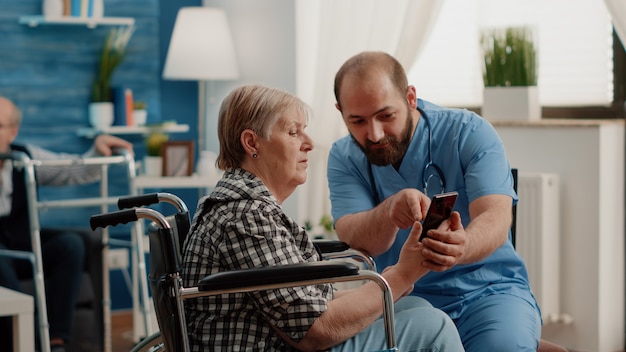
Photo by Freepik
It’s 7:12 a.m. Your loved one is sitting at the kitchen table, half awake, staring at a glucometer reading… while you’re also thinking about yesterday’s weight, the ankle swelling you noticed, and whether that “just a little short of breath” comment was nothing—or something.
If your parent (or spouse) is living with both diabetes and heart failure, mornings can feel like you’re checking the dashboard of a car that’s been making a new noise every week. You’re not trying to be dramatic. You’re trying to be prepared.
Why this combo can feel like juggling
Diabetes has you watching blood sugar, meals, timing, and energy. Heart failure has you watching fluid, weight changes, breathing, swelling, and fatigue. Put them together and families often feel like they’re managing two different rulebooks—while still trying to keep life normal.
That’s where home care designed for older adults in Greenville SC can be genuinely helpful: not by turning the home into a mini-hospital, but by creating a steady routine, catching early warning signs, and taking the daily load off the family so you’re not constantly improvising.
What “good support” looks like in plain terms
Good day-to-day help often looks boring from the outside (in the best way possible):
- Meals show up on time and make sense for the care plan
- Medications are taken consistently (and tracked simply)
- The house is set up to prevent slips and overexertion
- Someone notices “small changes” before they become emergencies
- Family members get real breaks, not just “rest while doing chores”
That’s the goal: steady days that add up to steadier months.
Diabetes and heart failure: two conditions, one daily routine
When families feel overwhelmed, it’s often because they’re thinking in medical labels instead of daily life. Let’s translate both conditions into the practical “what does this change at home?” level.
How diabetes changes everyday decisions
With diabetes mellitus, daily decisions can revolve around consistency:
- Eating regular meals (not skipping breakfast, then overeating later)
- Balancing carbs with protein/fiber
- Timing medications with food (depending on the person’s plan)
- Preventing highs and lows that affect mood, balance, and safety
Diabetes management is rarely about perfection. It’s about patterns. And patterns are easier when someone is not alone all day with fatigue, low appetite, or “I’ll do it later.”
How heart failure changes the “little things”
With heart failure, “little things” can quietly become harder:
- Walking from bedroom to bathroom might cause breathlessness
- Swelling can make shoes not fit and walking less stable
- Fatigue can make cooking feel like climbing a hill
- Fluid guidance can feel confusing (“Drink more water… but not too much?”)
- Sudden weight gain may signal fluid retention
Again: it’s not about fear. It’s about noticing and responding early.
Where families get stuck most often
In the real world, families often struggle with:
- Mixed messages between diet advice, fluid guidance, and appetite realities
- Inconsistent routines (meals and meds drift later and later)
- Overhelping (doing everything fast, making the senior feel powerless)
- Underhelping (assuming they’re fine until a crisis hits)
- Burnout math (one person doing 80% of the work, quietly collapsing)
Home care is most valuable when it reduces those friction points.
What home care can do during chronic-condition management

Photo by Freepik
Let’s set expectations clearly—because the best experience happens when everyone knows what the service is for.
Hands-on help vs coaching vs companionship
Home care support often falls into three lanes:
- Hands-on assistance: bathing, dressing, toileting support, safe transfers, meal preparation, light housekeeping, laundry
- Coaching and routine-building: gentle reminders, consistent meal timing, encouragement to move safely, creating simple checklists
- Companionship: conversation, shared activities, keeping someone engaged enough to eat, hydrate, and participate in daily life
The magic is the combination. A routine can be “medically perfect” on paper, but if your loved one feels lonely or defeated, they won’t follow it.
What home care usually doesn’t do
Most non-medical home care doesn’t replace clinical care. It typically won’t:
- diagnose symptoms
- change medication dosages
- provide skilled nursing procedures (unless paired with licensed services)
But a good caregiver can absolutely help observe, document, and communicate what they’re seeing so clinicians and families can make better decisions.
How independence stays at the center
Quality care isn’t “doing everything for them.” It’s “helping with the hard parts so they can do what’s still safe.”
Independence can look like:
- choosing clothing and meals
- doing grooming while someone stands by for safety
- walking short distances with support rather than avoiding movement entirely
- participating in meal prep (washing produce, stirring, portioning)
That’s not just feel-good. It helps maintain strength and confidence.
Day-to-day support that actually moves the needle
If you want the simplest way to think about daily home care, think in three time blocks: morning, midday, evening. Each block has different risks and different opportunities.
Morning: the “launch sequence”
Mornings are high leverage because they set the tone.
Common supports:
- Wake-up routine that isn’t rushed (fatigue + rushing = falls)
- Bathroom support and hygiene setup
- Breakfast that actually gets eaten
- Medication reminders aligned with the care plan
- Light tidy to clear pathways (especially to the bathroom)
- Quick check-in: “How’s your breathing? Any dizziness? Any swelling today?”
Even this basic structure can stop the day from sliding off the rails.
Midday: staying steady instead of crashing
Midday is where people either maintain momentum—or crash and skip meals.
Supports that help:
- Lunch prep or reheating a ready meal
- Hydration prompts (in line with clinician guidance)
- Short, safe movement (even a hallway walk)
- Errands or appointment transportation
- A calming routine to reduce anxiety and isolation
This is also where a caregiver can notice early changes: new confusion, increased fatigue, reduced appetite—things families don’t always see on quick visits.
Evening: preventing nighttime problems
Evenings can be tricky because tired people make riskier choices. They may also forget meds or feel more short of breath after a long day.
Evening supports often include:
- Dinner setup and cleanup
- Medication routine (without nagging)
- Night safety prep: clear path, water, phone, lights
- Gentle wind-down to support sleep
- Notes for family: mood, meals, symptoms, anything “off”
Overnights: when you may need extra coverage
Not everyone needs overnight care. But it can matter if there’s:
- frequent nighttime bathroom trips with fall risk
- anxiety or confusion after dark
- shortness of breath that worsens lying down
- a spouse caregiver who simply cannot keep doing nights
Overnight support is less about “watching” and more about preventing the one moment that becomes an ambulance call.
Meals, fluids, and the “wait… can they have that?” questions
Food conversations can become stressful fast—especially when diabetes and heart failure recommendations collide. The trick is to make meals simpler, not more restrictive.
A simple plate approach for diabetes-friendly meals
Instead of obsessing over every gram, many families do well with a pattern:
- Half the plate: non-starchy veggies (salad, green beans, roasted vegetables)
- A quarter: protein (chicken, fish, eggs, beans—based on preference)
- A quarter: starch/carb (brown rice, sweet potato, whole grains—portion matters)
- Add healthy fats if tolerated (olive oil, avocado) to improve satisfaction
Even better: keep breakfast consistent. When breakfast is predictable, blood sugar tends to behave more predictably too.
Heart failure considerations without fear-mongering
For heart failure, families are often balancing:
- sodium awareness
- fluid guidance (which varies by person)
- energy conservation (standing and cooking can be exhausting)
The practical approach: build meals around fresh basics, reduce heavily processed foods when possible, and avoid “surprise salt” foods that sneak sodium in.
No scare tactics needed. Just steady habits.
Grocery and kitchen setup that reduces mistakes
This is one of the easiest wins in home care: setting up the kitchen so good choices are the easy choices.
Helpful setup ideas:
- Put grab-and-go snacks at eye level (yogurt, nuts, cheese sticks, cut fruit)
- Pre-portion “safe” carbs so servings aren’t guesswork
- Keep a visible water plan if there’s fluid guidance (again, follow clinician direction)
- Label leftovers with dates so nothing becomes a mystery container
- Keep frequently used items at waist height to avoid bending and overexertion
When the kitchen is friendly, people eat better without feeling policed.
Medication routines without the constant nagging
Medication is where many families become accidental “enforcers,” and nobody enjoys that role.
The “one source of truth” medication list
Create one medication list that includes:
- medication name
- dose
- timing
- “with food” vs “without food” notes
- who manages refills
- pharmacy contact
Keep it updated. Keep it visible. This single document prevents a shocking amount of confusion.
Reminders vs administration
Different home care setups handle meds differently. Some provide reminders and routine support; some coordinate with services that can do more, depending on what’s allowed locally.
Either way, the goal is the same: reduce missed doses, prevent double-dosing, and catch side effects early.
Side effects families should notice early
You’re not diagnosing—but you are noticing patterns.
Examples worth flagging to a clinician:
- dizziness or faintness
- unusual sleepiness
- nausea leading to skipped meals
- new confusion
- worsening swelling or shortness of breath
A caregiver can help by documenting trends calmly instead of reacting to every single off moment.
A sample “real life” daily schedule
Schedules aren’t meant to control your loved one. They’re meant to reduce decision fatigue. Here’s a template you can adapt.
A flexible template families can copy
| Time block | What happens | Why it helps |
| Morning | Wake, bathroom, hygiene setup, breakfast, meds | Prevents rushed falls and skipped meals |
| Late morning | Light movement + rest, quick tidy, symptom check | Maintains stamina without overdoing it |
| Midday | Lunch + hydration plan, short activity | Prevents the “crash and skip lunch” pattern |
| Afternoon | Appointment/errands or rest; snack if needed | Supports stability and reduces lows |
| Evening | Dinner, meds, night safety setup | Reduces nighttime risk and confusion |
| Bedtime | Calm routine, essentials within reach | Supports sleep and safer night bathroom trips |
How to adapt it for appointments and bad days
On “bad days,” don’t try to keep the same pace. Instead, keep the anchors:
- breakfast + meds
- lunch + hydration plan
- a little movement (even short and gentle)
- dinner + meds
- night safety
Think of anchors like tent stakes. The day can blow around a bit, but it won’t collapse.
Symptoms to watch and when to escalate

Photo by Freepik
You don’t need to become a nurse to be effective. You just need a clear “what matters” list.
Diabetes red flags and hypoglycemia basics
One concern families should understand is hypoglycemia, which is low blood sugar. It can show up as:
- shakiness, sweating
- sudden irritability or confusion
- weakness, dizziness
- unusual sleepiness
Different people experience it differently. If your loved one has a clinician-provided plan for treating low blood sugar, follow that plan. If symptoms are severe or worsening, seek urgent medical help.
Heart failure warning signs
Heart failure symptoms that often warrant attention include:
- sudden weight gain over a short time (depending on clinician guidance)
- swelling in ankles, legs, or abdomen
- increased shortness of breath (especially at rest)
- needing more pillows to sleep due to breathing discomfort
- unusual fatigue beyond the normal pattern
Again: notice trends. Share them promptly.
When to call the doctor vs urgent care vs 911
Every family benefits from writing down a simple escalation plan. For example:
- Call the clinician for: “symptoms are changing, but stable,” medication questions, gradual swelling, appetite decline
- Urgent care / same-day evaluation for: concerning symptoms that aren’t emergency-level but feel new or escalating
- Call 911 for: severe breathing trouble, chest pain, fainting, signs of stroke, severe confusion with safety risk
If you’ve ever hesitated because you didn’t want to “overreact,” remember: asking for guidance early is often what prevents emergencies later.
Home safety that protects energy and confidence
When health is fragile, safety isn’t just about preventing disasters. It’s about conserving energy and reducing stress.
Fall risk basics
Simple changes can do a lot:
- clear pathways (especially to the bathroom)
- remove or secure throw rugs
- improve lighting
- keep mobility aids within reach
- place commonly used items at waist height
A caregiver can keep these habits consistent, which is more effective than doing a one-time “big cleanup” that slowly unravels.
Bathroom and nighttime setup
Bathrooms are high-risk because they combine slippery surfaces with urgency.
Helpful steps:
- non-slip mats
- shower chair if recommended
- towels laid out ahead of time
- nightlights to the bathroom
- a consistent place for walker/cane
- water and phone within reach at night
Heat and hydration realities in Greenville
Greenville summers can be hot and humid, and that matters. Heat can worsen fatigue, dizziness, and dehydration risk—while heart failure may come with specific fluid guidance.
The practical takeaway: keep the home comfortably cool, plan errands earlier in the day when possible, and follow the clinician’s fluid plan rather than guessing. Comfort is part of safety.
Supporting the family, not just the senior
When people think “home care,” they picture the senior. But the family is usually the one running on empty.
How a caregiver burns out quietly
The word caregiver sounds noble. In real life, it often looks like:
- constant background anxiety
- interrupted sleep
- resentment followed by guilt
- skipping your own medical care
- snapping at siblings, then apologizing
- feeling like your life got smaller overnight
If that feels familiar, you’re not failing. You’re overloaded.
Respite that feels like relief
Respite doesn’t need to be dramatic. Relief can be:
- a scheduled block where you leave the house
- someone else handling shower day
- not having to manage meals and meds every single day
- an afternoon where you’re not “on call”
When families get real breaks, they often become better caregivers in the moments that matter most.
Communication that prevents sibling chaos
If multiple family members are involved, simple communication tools prevent conflict:
- one shared update note (paper or digital)
- one point person for the agency
- a weekly 10-minute family check-in (short, focused, no debates)
The goal isn’t perfect agreement. It’s a workable plan.
How to get started in Greenville
Starting care can feel intimidating, but the process is usually more straightforward than families expect.
Step-by-step setup
Here’s a simple path many families follow:
- Write down the daily pain points (meals, bathing, meds, mobility, loneliness)
- Identify the riskiest times of day (morning bathroom trips, evenings, nights)
- Decide what you want help with first (start small if needed)
- Schedule an assessment to align services with real needs
- Build a weekly rhythm (same days/times reduces stress)
- Set up a communication routine (updates you can trust)
- Reassess after two weeks and adjust hours/timing
That “two-week tweak” is huge. The first schedule is rarely perfect. It’s a draft.
Questions to ask before you say yes
Use questions that reveal how real their personalization is:
- “How do you match caregivers to a client’s personality and needs?”
- “How do you communicate changes in appetite, swelling, or breathing?”
- “What’s your backup plan if a caregiver calls out?”
- “How do you support independence instead of taking over?”
- “Can we adjust the schedule after two weeks if we learn new patterns?”
A quick note on finding the right local fit
If you’re specifically looking for home care designed for older adults in Greenville SC, focus on the agency’s process more than their promises: how they assess needs, how they document observations, and how quickly they adapt when real life changes.
If you’re comparing providers, you may come across Always Best Care; whichever team you choose, prioritize caregiver consistency, clear communication, and a plan that supports daily routines without stripping independence.
A Practical Next Step
Photo by Freepik
If you’re trying to support a loved one with diabetes and heart failure, you don’t need to solve every “what if” today. You need to stabilize the week.
Try this as your next step:
- Pick two high-impact anchors (example: breakfast + meds, and dinner + night safety)
- Add one quality-of-life support (short walk, companionship at lunch, or errands help)
- Track three simple signals for two weeks: meals eaten, energy level, and any breathing/swelling changes
- Adjust the plan based on patterns, not panic
When day-to-day life becomes predictable, health management becomes easier—and family stress drops. That’s not a small win. That’s the foundation.
FAQs
1) Can home care help if my loved one is still “mostly independent”?
Yes—often that’s the best time to start. Light support with meals, routines, and safety can prevent the slow slide that leads to emergencies. It can also protect independence by helping with the risky or exhausting tasks while your loved one keeps control over the rest.
2) What should we track at home if diabetes and heart failure are both in play?
Keep it simple and consistent. Many families track meals eaten, energy level, and any notable symptom changes (like swelling, breathing discomfort, dizziness). If clinicians provide specific tracking guidance (like daily weights or glucose checks), follow that plan.
3) How do we avoid constant arguments about food and routines?
Routines work better than debates. Set predictable meal times, keep easy options visible, and focus on supportive choices rather than policing. A caregiver can help normalize the routine so it doesn’t feel like family “nagging.”
4) How many hours of care do families usually start with?
There’s no single right number. Many start with coverage during the hardest time block (often mornings) 3–5 days a week, then adjust after two weeks. Strategic timing usually matters more than maximum hours.
5) What’s the biggest sign we need more support than we thought?
Look for trends: more skipped meals, increasing confusion, repeated near-falls, worsening fatigue, or rising caregiver burnout. If the family feels like it’s constantly bracing for the next incident, that’s usually a sign the plan needs more structure or coverage.
In-Home Care Services That Help Seniors Stay Independent During Recovery
A scene you might recognize

Photo by Freepik
Your mom is finally home after the hospital. The house smells the same. The light falls through the same kitchen window. Everything looks “normal”… until it isn’t.
She shuffles toward the bathroom and insists she’s fine. She reaches for the counter, misses by an inch, and your stomach does that weird little drop. You offer help; she snaps, “I said I’ve got it.” Ten minutes later, she’s exhausted from something that used to be automatic. And now you’re standing there wondering: Do I step in? Do I back off? How do I keep her safe without making her feel like she’s lost her life?
This is the exact moment people start searching for in-home care services that help seniors stay independent—not because they want to hand everything off, but because they want recovery to feel like a bridge back to normal instead of a cliff edge.
Independence during recovery is a balancing act. Too little support, and small problems turn into big setbacks. Too much support, and your parent starts feeling managed, watched, or (worst of all) incapable. The sweet spot is real help in the moments that matter, delivered in a way that keeps your loved one’s pride intact.
Let’s talk about what that actually looks like—week to week, room to room, and decision to decision.
What “independent during recovery” really means
Independence isn’t doing everything alone
A lot of families get stuck on a stubborn definition of independence: “If Dad needs help, he’s not independent.” That’s not just unrealistic—it’s unfair.
Independence during recovery usually means:
- Making choices (what to wear, what to eat, when to shower)
- Doing what’s safe to do, even if it takes longer
- Getting support for the risky parts (transfers, bathing, stairs, heavy chores)
- Keeping routines familiar so confidence returns
There’s a big difference between “I can’t do this” and “I shouldn’t do this alone right now.” Recovery is temporary. Skills can come back. Strength can return. But only if the person stays safe enough to keep moving forward.
A helpful way to think about this is through the lens of activities of daily living—basic tasks like bathing, dressing, toileting, eating, and moving around. During recovery, the goal isn’t to yank these tasks away. It’s to support them so your loved one can keep participating.
The first 72 hours home are the make-or-break window
Hospitals are controlled environments. Home is not.
The first three days back are when problems pop up like surprise potholes:
- The shower is more slippery than anyone remembered.
- The bed is too low.
- The “easy” stairs at the front door suddenly feel like a mountain.
- Meds are confusing when they’re no longer handed over on schedule.
- Pain makes people irritable and stubborn (very normal, very hard).
If you plan for the first 72 hours like you’re planning for bad weather—extra support, clear routines, and fewer “let’s see how it goes” decisions—you prevent a lot of spirals.
The recovery friction points families don’t expect
Recovery isn’t just “rest and heal.” It’s a bunch of tiny daily hurdles that drain energy faster than people expect.
Pain, fatigue, and timing
Pain isn’t just pain. It changes everything:
- People move differently.
- They rush to get it over with.
- They skip meals because standing feels hard.
- They stop drinking water so they won’t have to get up to use the bathroom.
Fatigue is the sneaky one. Your parent might look okay for 15 minutes and then hit a wall. That’s why timing support matters more than “how many hours” in the abstract.
Bathroom safety and “small” slips
Most serious home accidents aren’t dramatic. They’re quick, quiet, and “I almost had it.”
The bathroom is the classic danger zone: slick floors, awkward turning, low toilets, hot water that can surprise sensitive skin. If you’ve ever heard a loved one say, “I’ll just be careful,” you already know how unreliable that plan is when someone is tired and medicated.
A lot of independence is preserved by preventing falls—not by hovering, but by setting up smarter routines and safer movement.
Meals, hydration, and the quiet slide
Ask families what got harder after discharge, and you’ll hear it again and again: eating.
Not because nobody cares, but because cooking takes energy, standing hurts, and appetite gets weird after illness or anesthesia. Hydration often drops for the same reason.
The result can be a “quiet slide”:
- less protein → slower healing
- less water → dizziness and constipation
- less movement → weakness and higher fall risk
This is where small support can have a big ripple effect.
Medication routines without nagging
Medication is tricky during recovery because it’s often temporary, changing, and time-sensitive.
The challenge isn’t just remembering pills. It’s:
- understanding which ones are “as needed” vs scheduled
- avoiding double doses
- managing side effects (nausea, sleepiness, constipation)
- keeping a consistent rhythm without turning the house into a lecture hall
Good support here feels like structure, not scolding.
What in-home support can look like in real life
This is where people sometimes picture a one-size-fits-all service list. But the most effective support is tailored: it fills the gaps, protects dignity, and gets out of the way when your loved one can do something safely.
Personal care that protects dignity
Personal care during recovery isn’t about “doing everything for them.” It’s about helping with the hard parts while letting them lead the process.
Examples:
- Setting up the bathroom so your parent can wash independently (with someone nearby for safety)
- Assisting with socks, shoes, compression stockings, or braces
- Helping with safe transfers in and out of the shower
- Supporting grooming so your loved one feels like themselves again
A good caregiver knows when to step in—and when to pause and let your loved one try.
Mobility help and fall-risk routines

Mobility support can be surprisingly simple and incredibly effective:
- Walking alongside during the first trip down the hallway
- Clearing pathways and moving clutter without making it feel like a renovation
- Practicing safe “sit-to-stand” technique
- Reminding someone to use the walker (without shaming them)
It also includes noticing patterns: if dizziness hits after certain meds, or if the bathroom trip at night is when near-falls happen.
Meals, hydration, and grocery rhythm
Food support isn’t fancy cooking (unless that’s what your family wants). It’s often:
- easy breakfasts that don’t require a lot of standing
- prepped snacks at eye level
- a “two meals + leftovers” rhythm
- grocery restocking so the house doesn’t run on random crackers
Even small routines—like a filled water bottle always within reach—can keep recovery moving forward.
Medication reminders and habit-building
Medication support can be handled in a respectful, adult-to-adult way:
- setting up a pill organizer
- using a written schedule on the fridge
- tracking doses in a simple log
- keeping an eye out for side effects that should be reported
The goal is to build a routine your loved one can maintain after support tapers.
Transportation and appointment logistics
Recovery often comes with a parade of appointments: follow-ups, therapy, labs, wound checks.
Support might include:
- rides to appointments
- walking assistance in and out of buildings
- note-taking so instructions don’t get lost
- picking up prescriptions
This is also where families often feel the most stretched—because it lands during work hours.
Companionship that keeps someone engaged
Here’s the underrated truth: isolation makes recovery harder.
When someone feels alone, they’re more likely to:
- stay in bed
- skip meals
- neglect exercises
- spiral into anxiety
Companionship during recovery can be as simple as sharing lunch, walking to the mailbox together, or sitting nearby while your loved one folds towels and chats.
Match the help to the recovery type
Different recoveries have different “danger zones.” Here’s a practical way to think about it.
| Recovery situation | Common independence challenge | What support focuses on | Best time blocks |
| Post-surgery (hip/knee/abdomen) | Transfers, bathing, fatigue | Safe movement, shower setup, meal prep, med routine | Mornings + early evenings |
| Illness (pneumonia/flu/weakness) | Low stamina, dehydration | Hydration prompts, nutrition, short walks, monitoring | Late morning + midday |
| Hospital stay with confusion | Disorientation, sleep disruption | Calm routine, supervision, gentle re-orientation | Evenings + nighttime setup |
| Stroke/neuro recovery | Balance, one-sided weakness | Mobility practice, safe home layout, appointment support | Mornings + therapy days |
After surgery
Surgery recovery is often about:
- safe bathroom routines
- preventing overexertion (“I feel better today!”)
- handling pain meds responsibly
- keeping the home environment easy to navigate
After an illness
After illness, the body feels “thin” for a while—like the battery drains fast. Support often works best in short bursts:
- breakfast + hydration
- a short walk
- lunch setup
- rest
After a hospital stay with confusion
Some seniors come home “not quite themselves” even if the medical problem is treated. Hospital environments can trigger delirium, especially in older adults, and the after-effects can linger.
In these cases, the goal is calm, predictable structure:
- consistent sleep/wake rhythm
- gentle reminders of time and place
- reduced evening stimulation
- supervision around unsafe wandering or impulsive choices
After a stroke or neuro event
Neuro recovery is often about repetition, patience, and safe practice. Help might include:
- cueing for safe movement
- support for one-handed cooking adaptations
- transportation to therapy
- home routines that reinforce therapy goals
A simple “Recovery Independence Plan” you can use this week
If you’re overwhelmed, good. That means you care. Now let’s make it simpler.
Step 1: Map the day in three zones
Instead of planning every hour, break the day into three zones and identify what tends to go wrong in each one.
Morning
Usually includes:
- getting out of bed safely
- toileting
- washing up
- breakfast
- meds
This is where assistance often prevents the “domino effect” of a bad start.
Midday
Usually includes:
- lunch
- light movement
- errands or appointments
- rest
Midday is often where you reinforce independence gently: “Let’s walk to the porch,” not “You need to do your exercises.”
Evening
Usually includes:
- dinner
- cleanup
- bathroom routines
- meds
- night safety setup
Evening support is powerful when fatigue and confusion rise late in the day.
Step 2: Identify the top 5 risky moments
Ask: “When is my loved one most likely to get hurt or give up?”
Common answers:
- First bathroom trip after waking
- Showering
- Carrying food/drinks while using a walker
- Stairs at the doorway
- Nighttime bathroom trips
Once you know the top 5, you stop guessing and start targeting.
Step 3: Choose a schedule that doesn’t smother
A schedule should feel like a helpful rhythm, not surveillance.
A practical rule:
Cover the risky moments + one daily quality-of-life win (a walk, a favorite meal, a social call). Recovery improves when life still feels like life.
Step 4: Set up a communication loop
This can be low-tech and still effective:
- a notebook on the counter
- a simple checklist
- a shared family message thread with one designated point person
Track:
- meals eaten
- water intake (roughly)
- meds taken (yes/no)
- pain level trends
- mobility notes (“walked to mailbox”)
When information is shared, fewer arguments happen—because everyone’s reacting to the same reality.
Sample schedules that keep seniors in the driver’s seat
Photo by Freepik
These are examples, not prescriptions. The point is to show how support can be placed strategically—like spotlights, not floodlights.
Schedule A: Short morning visits that set the day up
Best for: mild-to-moderate recovery needs, strong evenings, decent balance with some fatigue.
Mon/Wed/Fri (2.5–3 hours, mornings)
- Hygiene setup + safe shower support (as needed)
- Breakfast + hydration
- Medication routine
- Light tidy for safety (pathways, laundry swap)
- Prep lunch/snacks within easy reach
Why it works: mornings are the high-leverage time. A good start often means fewer problems later.
Schedule B: Split shifts for tough evenings
Best for: recovery with late-day fatigue, anxiety, or higher fall risk at night.
Mon–Fri
- Morning (2 hours): breakfast, meds, hygiene, quick safety scan
- Evening (1.5–2 hours): dinner setup, meds, night safety, calm wind-down
Why it works: you’re supporting the two most fragile windows without paying for hours when your loved one is fine.
Schedule C: A 2–3 week ramp-down plan
Best for: post-surgery or post-hospital where needs drop as strength returns.
Week 1: daily visits (3–4 hours) covering hygiene + meals + mobility practice
Week 2: 4 days/week (3 hours) with one evening check-in
Week 3: 2–3 days/week (2–3 hours) focused on errands + meal prep + confidence-building
Why it works: it mirrors real recovery—more support early, less later—without yanking help away too soon.
Home tweaks that make independence easier
You don’t need to remodel. You just need to remove friction.
Bathroom
High-impact changes:
- non-slip mat and a stable shower chair
- grab bars (properly installed)
- raised toilet seat if needed
- towels and toiletries placed within easy reach
A small tip: if your loved one is stubborn about “safety gear,” frame it as “comfort” and “energy-saving,” not “risk.”
Kitchen
Make it easy to eat and drink without effort:
- snacks at eye level
- lightweight cups and plates
- a “recovery shelf” in the fridge: prepped items front and center
- avoid heavy pans and high cabinets for now
If the kitchen feels like a hurdle, people stop using it. That’s when nutrition slips.
Bedroom and nighttime
Night routines protect independence because they prevent panic:
- nightlights in the hall and bathroom
- phone and water within reach
- walker/cane placed consistently
- clear pathway (no baskets, no cords)
Nighttime “just in case” planning is not paranoia—it’s smart.
Low-stress tech
If your loved one likes tech, keep it simple:
- medication reminders
- a single-button call device
- motion-activated lights
If they hate tech, skip it. Independence shouldn’t depend on gadgets they’ll ignore.
Working with clinicians without turning the house into a clinic
Reinforcing PT/OT goals at home
Your therapist’s plan is only as good as what happens between sessions. Supporting physical therapy goals at home can be as simple as:
- making sure exercises happen at the best energy time of day
- helping your loved one set up safely (chair placement, stable surface)
- celebrating consistency, not perfection
A caregiver can also help translate clinical instructions into real life:
- “Don’t bend like that while loading the washer.”
- “Let’s take a break halfway to the mailbox.”
- “We’ll set the shoes here so you don’t twist.”
When to call the doctor
Families sometimes wait too long because they don’t want to “bother” anyone. Call if you notice:
- sudden confusion or big mood changes
- new shortness of breath
- uncontrolled pain
- fever or signs of infection
- repeated dizziness, fainting, or near-falls
- refusal to eat/drink for a full day
Trust the pattern. One weird moment can happen. A trend is a signal.
How family can help without accidentally taking over
This is the emotional part—because independence is tied to identity.
Scripts that reduce resistance
Instead of: “You can’t do that.”
Try:
- “Let’s do it together this week, then you can take it back when you’re stronger.”
- “I want you to save your energy for the fun stuff.”
- “How about you lead, and I’ll be your backup?”
Instead of: “You need help.”
Try:
- “You’re recovering. Support is part of the plan, not a punishment.”
Language matters more than people think.
Avoiding “learned helplessness”
When someone is recovering, it’s tempting to do everything fast:
- you pour the drink
- you fetch the sweater
- you clean up before they even try
But speed can unintentionally teach: “You don’t need to do anything.”
A better approach:
- Let them do what’s safe, even if it’s slow.
- Help with the dangerous parts.
- Offer choices so they stay in control.
Independence grows when people keep using it like a muscle.
Burnout prevention
If you’re the family caregiver, your health is part of the plan too.
Three practical guardrails:
- Name your non-negotiables (sleep, work hours, your own medical needs).
- Schedule time off like an appointment (not “if I have time”).
- Don’t do the tasks a caregiver can do—save your energy for emotional support and decision-making.
Choosing the right provider without overcomplicating it

Photo by Freepik
You’re not hiring a robot. You’re inviting a person into a private moment of life. Choosing carefully matters.
If you’re comparing in-home care services that help seniors stay independent, ask questions that reveal how flexible and human their approach is—not just what they offer on paper.
Questions that reveal real personalization
- “How do you match a caregiver’s style to my parent’s personality?”
- “How do you adjust hours week to week as recovery changes?”
- “How do caregivers document what happened during a visit?”
- “What does a good first week look like to you?”
- “How do you handle a senior who refuses help with bathing?”
One provider you may come across in your search is Always Best Care—and whether you speak with them or someone else, the best agencies will answer with specifics, not vague promises.
Red flags
- Pushing a fixed schedule without asking about your parent’s routine
- No clear communication method (you’re left guessing)
- Dismissing your concerns (“That’s normal, don’t worry” without details)
- Treating independence like an inconvenience
How to evaluate week one
After the first week, ask:
- Does my loved one seem calmer, safer, more confident?
- Are meals and hydration improving?
- Are we arguing less about help?
- Do I feel less panicked—and more informed?
If the answer is yes, you’re on the right track. If not, adjust the plan before frustration becomes the default.
Where You Go From Here
Recovery is a season. It can be a frustrating one, sure—but it can also be the season where your loved one proves (to themselves most of all) that they can adapt and bounce back.
The goal isn’t to create a perfect routine. It’s to create a supportive one: help in the moments that carry risk, breathing room for dignity, and a path that slowly hands tasks back as strength returns.
Start with the next seven days. Pick the two hardest parts of the day—maybe mornings and shower time, or evenings and meals. Put support there. Keep everything else simple. Then reassess.
Because independence doesn’t return all at once. It comes back in small wins: a steady shower, a walk to the mailbox, a meal eaten without exhaustion, a night without fear. Stack enough of those wins, and you’ll feel the shift.
FAQs
1) How long do seniors typically need help at home after a hospital stay?
It depends on the reason for hospitalization, overall strength, and how quickly stamina returns. Some people need a few focused weeks (especially after surgery), while others benefit from longer support if fatigue, balance issues, or confusion linger. A smart approach is to plan more help early, then taper as routines stabilize—rather than starting too small and scrambling after a setback.
2) What’s the difference between companionship and personal care during recovery?
Companionship focuses on presence, encouragement, meals, light errands, and keeping someone engaged. Personal care includes hands-on help with bathing, dressing, toileting, and safe transfers. Many recoveries need a blend: practical help for safety, plus companionship to prevent isolation and keep motivation up.
3) Can in-home caregivers help with therapy exercises?
Caregivers can often support routine and consistency—like helping someone get set up safely, reminding them of the plan, and encouraging practice. They typically don’t replace therapists, but they can reinforce the daily habits that make therapy more effective in real life.
4) What if my parent refuses help because they feel embarrassed?
This is incredibly common. It helps to frame support as temporary and recovery-focused (“backup while you regain strength”), offer choices, and keep the tone adult-to-adult. Consistency matters too—many seniors become more comfortable once they trust the caregiver and feel respected.
5) How do we decide which hours matter most if we can’t afford a lot of coverage?
Prioritize the moments with the highest risk and highest payoff: bathing, bathroom routines, mornings when dizziness is worse, meal setup, and evening fatigue. A few well-timed visits can prevent falls, missed meals, and medication mistakes—often making a bigger difference than scattered hours that don’t cover the tough spots.
Charting a Course to Wellness: Specialized Care at Fusion Recovery
The decision to embark on the path to lasting recovery represents one of the most significant and courageous acts an individual can undertake. At Fusion Recovery, this journey is supported by an unwavering, core commitment: every person, irrespective of their current challenges or past history, is fundamentally deserving of respect, compassionate care, and a genuine chance at a life of fulfillment. Addiction is treated here as the complex, chronic medical illness that it is, rather than a failure of character. Securing expert, high-quality clinical guidance is the vital first step toward regaining personal independence and determining a new, healthier future.
When individuals or their loved ones are urgently seeking drug addiction help or alcohol help, the pressure and complexity of navigating treatment options can be immense. An exemplary addiction recovery center provides far more than mere logistics; it offers a dedicated, empathetic partnership rooted in deep clinical knowledge. The team at Fusion Recovery is expertly trained to understand and address the intricate interplay of trauma, neurobiology, and the frequently co-occurring mental health conditions that often lie beneath substance use disorders.
- The Clinical Cornerstone: Medication-Assisted Treatment (MAT)
Extensive scientific literature spanning decades has conclusively proven that reliance on sheer willpower is rarely an adequate strategy for overcoming the potent and often life-threatening dependency of opioid use disorder. This critical, evidence-based understanding is why Medication-Assisted Treatment (MAT) has been firmly established as the industry standard in contemporary addiction care. MAT employs a highly integrated methodology, combining specific, FDA-approved medications with structured behavioral therapies to provide simultaneous relief for both the physiological and psychological aspects of dependency.
The Proven Efficacy of Methadone Treatment
Methadone treatment is recognized globally as one of the most studied, widely implemented, and highly effective pharmacological tools available specifically for opioid addiction. Its action mechanism involves acting as a full opioid agonist, occupying the brain’s opioid receptors—the very receptors targeted by substances like heroin or fentanyl. Crucially, when methadone is consistently and correctly administered under rigorous medical supervision, it successfully stabilizes the client without producing the intense, destabilizing euphoric effects associated with substance misuse.
This pharmacological stabilization is profoundly beneficial, offering clients an immediate, solid physical foundation upon which they can begin the difficult work of recovery. It effectively interrupts the debilitating cycle of physical withdrawal symptoms and acute cravings, enabling individuals to resume normal daily functioning, maintain employment, diligently repair family relationships, and fully participate in essential therapeutic services without the constant distraction of physical dependence.
Furthermore, methadone treatment for opioid addiction has been verified by countless studies to dramatically reduce the risk of relapse and, most importantly, significantly lower the incidence of fatal overdose. By providing a sustained, controlled dose that maintains receptor occupancy and normalizes key biological functions, methadone for drug treatment functions as a critical, life-saving safety net for clients commencing their deeper psychological and emotional recovery.
The Fusion Model: Integrating Methadone and Clinical Excellence
Fusion Recovery transcends the capabilities of a standard methadone clinic or simple dispensing site. It operates as a comprehensive methadone center where medication management is seamlessly integrated with specialized, evidence-based clinical work. While the prescribed medication expertly handles physical dependency and stabilization, the center’s highly trained clinical team addresses the underlying emotional, behavioral, and psychological roots of the addiction.
Recognizing that recovery is highly personal and never one-size-fits-all, Fusion Recovery meticulously tailors its methadone treatment drug addiction plans to align with the unique clinical profile, personal history, and specific recovery goals of each client. Effective methadone drug addiction treatment necessitates a person-centered approach that respects the client’s individual background. Treatment protocols routinely incorporate advanced therapeutic modalities, including trauma-informed care, Cognitive Behavioral Therapy (CBT), and Motivational Interviewing, ensuring a holistic and robust path to sustained sobriety.
For individuals whose clinical suitability or lifestyle requirements favor a different pharmacological approach, the center also offers suboxone treatment. This combination product, containing buprenorphine and naloxone, provides another highly effective MAT option prescribed to alleviate opioid cravings and ease withdrawal symptoms, serving as a powerful alternative for clients who may require different scheduling or medical management accommodations.
- Levels of Care: From Stabilization to Independent Living
When a client or family initially seeks help, the protective inclination often leads them to search for the most restrictive environments, such as a traditional inpatient methadone treatment facility or inpatient alcohol rehab. The natural desire is for a supervised, controlled setting. However, the modern recovery philosophy at Fusion advocates for a progressive model that carefully balances initial medical stability with the essential development of real-world skills and increasing client autonomy.
Fusion’s Progressive Continuum of Care
Fusion Recovery proudly offers innovative alternatives designed to deliver a high standard of medical care without the institutional rigidity associated with older treatment models.
- Ambulatory Detox: This medical program ensures that the client’s body is safely and comfortably cleansed of substances under consistent medical supervision. Significantly, this is conducted on a non-residential basis, offering clients greater scheduling flexibility while still providing the intensive medical management necessary for safely handling acute withdrawal symptoms.
- Residential Reintegration: This unique program is specifically engineered to bridge the critical transition phase between initial stabilization and truly independent living. It supplies the essential structure, clinical support, and communal environment often sought in inpatient methadone treatment settings, but with a forward-looking mission: empowering clients to successfully reintegrate into their daily lives, maintain employment, and cultivate healthier relationships.
The Strength of Local Outpatient Services
The true foundation of sustained, long-term recovery is frequently found within comprehensive outpatient services. These programs expertly allow clients to engage in intensive, clinically rich treatment while continuing to manage their daily responsibilities, maintain their careers, and attend to family commitments.
- Intensive Outpatient Program (IOP): This highly structured level involves multiple hours of targeted therapy, educational sessions, and group counseling per week, establishing high accountability and vital support during the vulnerable initial stages of recovery.
- Outpatient Program (OP): This stage provides essential continued support with a reduced time commitment, making it ideal for long-term maintenance, solidifying relapse prevention skills, and building a robust personal support network.
Proximity and Support: Why “Near Me” is Crucial
The simple search query for methadone treatment near me often returns generic listings. For residents in the Albany, Menands, and surrounding areas, Fusion offers a community-focused sanctuary. Unlike remote rehab centers where clients are isolated from their support systems, Fusion’s accessible local presence actively encourages family engagement and facilitates a much smoother, less disruptive return to everyday life. This convenient local access is a significant and deliberate distinction among methadone treatment clinics and other centers prioritizing long-term success metrics.
III. Specialized Care for Alcohol Dependency and Co-occurring Disorders
The requirement for highly specialized care extends far beyond opioid use. Alcohol use disorder remains a major, persistent health struggle in the community, demanding specialized alcohol treatment protocols that address its unique medical and psychological complexities.
Mitigating Medical Risks in Alcohol Withdrawal
Withdrawal from chronic alcohol use carries unique and potentially severe medical risks, including life-threatening complications such as seizures and delirium tremens (DTs). This necessitates the protective setting often associated with inpatient alcohol rehab, used to manage the potentially fatal nature of acute withdrawal. At Fusion, the medical team closely supervises this process through medically managed ambulatory detox protocols, prioritizing absolute client safety and physical comfort while preparing the client for subsequent therapeutic engagement.
Expertise in Dual Diagnosis Integration
Fusion Recovery’s programs are designed to deliberately exceed the standard of other rehabilitations centers by offering robust, seamlessly integrated dual-diagnosis support. The clinical team understands that substance use disorders rarely occur in isolation; they frequently co-occur with untreated mental health disorders such as anxiety, depression, or PTSD. Therapists at Fusion are uniquely trained to treat the whole person, systematically addressing both the substance use and the co-occurring mental health conditions simultaneously and holistically, which is a key predictor of sustainable recovery.
- The Fusion Commitment: Excellence in Client Experience
Fusion Recovery is actively committed to redefining the industry standard for an addiction recovery center. Its facilities are intentionally designed to be warm, welcoming, and conducive to “intentional healing,” offering a sharp contrast to older, impersonal, and overly clinical settings.
- Clinical Excellence: The center consistently employs innovative, trauma-informed treatment methodologies that are backed by data and clinically proven to support long-term sobriety. This commitment to superior, evidence-based care ensures that every client receives the most sophisticated and effective interventions available today.
- Specialized Support for Veterans: Fusion is honored to serve those who have served the nation. The center is seamlessly in-network with Tri-Care and CCN, providing fully integrated and specialized support for veterans and first responders, recognizing and addressing the distinct occupational and psychological challenges they face.
- A Culture of Respect: Fusion Recovery actively works to dismantle the pervasive stigma of seeking addiction help. This is achieved through a core operating mandate that ensures every interaction—from the first call to daily counseling—is rooted in dignity, understanding, and unwavering respect for the client’s journey.
- Streamlined Admissions and Verification: The dedicated administrative team is committed to alleviating the complexity of starting care. They expertly guide potential clients and their families through the intricacies of insurance verification, proactively collaborating with a wide spectrum of major providers to ensure that high-quality, life-saving treatment remains accessible.
Empowering the Future
Whether an individual is seeking specific methadone treatment clinics, general methadone for drug treatment programs, or a supportive, trauma-informed environment to address alcohol use, Fusion Recovery is ready to extend its expert, compassionate help.
The most profound goal of this intensive work is not simply initial abstinence; it is successful, sustainable reintegration into a meaningful, independent life. It is about equipping clients with the essential tools, foundational stability, and deep emotional resilience required to build a life worth living—a life free from the destructive confines of addiction. Individuals should never allow fear, shame, or outdated societal stigma to impede them from claiming this new beginning. When the critical need for drug addiction help arises, the compassionate and professional team at Fusion Recovery is standing ready to assist.
Potential clients should contact Fusion Recovery today for immediate consultation, confidential insurance verification, and to take the crucial, life-changing first step toward healing and a lasting recovery.
A Premium Child Care Franchise Opportunity for Education-Focused Entrepreneurs
Families everywhere are searching for safe, enriching early-education environments that give their children a strong start. At the same time, entrepreneurs are looking for stable, mission-driven businesses that can scale in growing communities. That overlap is why the child care industry continues to attract serious investors. If you’re evaluating a child care franchise, you want a brand that offers both a proven system and a strong reputation with parents.
Kids ‘R’ Kids Learning Academies has built that reputation over decades. Widely recognized across the United States for delivering a private-academy experience, Kids ‘R’ Kids remains a standout among child care franchise opportunities. It also carries a rare distinction in the industry: Kids ‘R’ Kids was the first childcare company to franchise in America, and it is still family-owned today. That combination of legacy expertise and ongoing leadership involvement has helped the brand become a trusted choice for franchisees who want to own a quality-focused daycare and preschool business.
Below is an overview of what makes Kids ‘R’ Kids one of the top daycare franchises to consider, including investment expectations, franchise support, and standout opportunities in Florida, Georgia, and Texas.
A Legacy Brand Among Child Care Franchises
Kids ‘R’ Kids began in 1985 after its founders envisioned a childcare center that felt nurturing first and educational second. Their guiding philosophy became simple and memorable: children learn best when they feel loved, protected, and confident. That idea shaped the culture of every academy that followed. Over time, the company expanded into a nationwide system with more than 170 locations and a consistent identity across markets.
This background matters when you compare children’s education franchises. Many newer childcare concepts don’t have decades of operational refinement behind them. Kids ‘R’ Kids does. The brand has spent years building systems for staffing, facility design, parent communication, learning standards, and marketing. For franchisees, that history translates into less guesswork and more structured guidance from day one.
For investors researching child care franchises broadly, the company’s long-term presence shows that the model is not experimental. It is a mature business system designed to serve families consistently in different communities, economic conditions, and state regulatory environments.
Why Child Care Franchise Opportunities Are Growing
Childcare is a recession-resistant category because it is a need-based service. Parents require safe, reliable care to work and provide for their households. That demand holds steady even when other consumer industries fluctuate. What’s changing in recent years is that parents increasingly want education built into care, not simply supervision.
This shift helps explain why preschool franchise opportunities and daycare franchise opportunities remain among the most sought-after service franchises in the country. Families are looking for programs that support:
- cognitive and academic growth
- language and literacy readiness
- social-emotional development
- structured routines and safe environments
- creative and physical learning activities
Kids ‘R’ Kids meets these expectations through an academy model that serves children from infancy through school age. Because the programs extend beyond preschool alone, franchisees benefit from multiple enrollment pathways rather than relying on one narrow age group. The model typically includes infant care, toddler learning, preschool and pre-K, before- and after-school services, and seasonal programs like summer camp.
This multi-program approach is a big reason many owners place Kids ‘R’ Kids among the best daycare franchise in USA conversations. You’re not running a single-purpose daycare. You’re operating a full learning academy that grows with families.
The Kids ‘R’ Kids Academy Model
Parents typically choose childcare centers based on three core factors: trust, educational value, and environment. Kids ‘R’ Kids structures its academies to check all three boxes.
First, trust is built through safety standards, consistent teacher training expectations, and a family-centered culture. Second, educational value is reinforced through structured learning programs designed for developmental milestones. Third, environment matters because parents want a center that feels clean, professional, secure, and inspiring. Kids ‘R’ Kids academies are purpose-built facilities intended to feel more like private schools than casual daycare locations.
For franchisees, that premium positioning is part of the brand advantage. When you open a Kids ‘R’ Kids academy, you are introducing a high-quality option that stands apart visually and operationally from smaller daycare operators. This helps with early enrollment momentum and long-term parent retention.
Curriculum Strength and Learning Standards
One of the most important differences between ordinary daycare franchises and education-focused academies comes down to what children experience daily. Kids ‘R’ Kids uses proprietary learning systems aimed at preparing children for kindergarten and beyond. The model is structured, age-specific, and designed to support both academic readiness and social confidence.
The brand’s curriculum emphasizes balanced development. Children are guided through early literacy, math foundations, science exploration, and creative learning. In addition, Kids ‘R’ Kids places meaningful focus on collaboration, interpersonal skill-building, movement, and problem solving. From a parent’s perspective, this positions the academy as both childcare and early education in one place.
For potential owners comparing preschool franchises, this is a critical advantage. A strong curriculum makes marketing easier because what you are offering is clear: a loving environment with measurable academic and developmental progress.
Kids ‘R’ Kids Franchise Cost and Investment Expectations
A common search among buyers is childcare franchise cost, and Kids ‘R’ Kids is straightforward about the scale of investment required. This is a premium academy model, meaning the facilities are large and purpose-built. The total development investment typically averages in the multi-million-dollar range, often aligned with building a high-capacity center from the ground up. Entry into the process itself can begin at a lower planning threshold, but most owners should expect a full build-out commitment consistent with a private-academy facility.
When you research kids r kids franchise cost, it helps to understand what that investment supports. The build-out commonly includes land or long-term lease requirements, construction, classroom equipment, outdoor activity spaces, safety systems, technology integration, licensing steps, and pre-opening training and marketing support.
Because of that scale, Kids ‘R’ Kids is often compared more closely with high-end preschool franchise opportunities than with smaller daycare starts. The benefit is that owners open with strong enrollment capacity and an academy built to serve families for years.
Daycare Franchise Support That Reduces Risk
Starting a childcare business without a franchise can be done, but it requires building everything from scratch. Owners must create staffing structures, compliance systems, parent communication processes, marketing channels, tuition pricing models, and educational programming while also navigating complex state licensing requirements. That workload is one reason many investors choose daycare franchise opportunities instead.
Kids ‘R’ Kids provides franchise support through every stage of development and operation. Owners benefit from:
- market and territory evaluation
- site selection guidance
- development planning for facility standards
- intensive training for owners and academy directors
- pre-opening marketing and enrollment strategy
- operational coaching after launch
- ongoing systems for curriculum execution and staff management
This kind of daycare franchise support is especially valuable for owners new to childcare. Even experienced entrepreneurs appreciate the depth of systems because education businesses demand strict consistency and trust-building.
Preschool franchise support also continues after opening, helping owners respond to enrollment changes, staffing needs, and local marketing opportunities without feeling isolated.
Daycare Franchise Opportunities in Florida
Florida is an attractive state for childcare investment due to steady population growth, high relocation rates, and a continuous stream of young families moving into suburban corridors. Entrepreneurs searching for daycare franchise Florida options or thinking about starting a daycare in Florida often prioritize brands that can arrive with instant credibility.
Kids ‘R’ Kids already has a presence in Florida and continues expanding in select territories. The premium academy feel fits well in fast-growing communities where parents want education-based care and are willing to invest in higher-quality early learning.
For buyers evaluating franchise opportunities in Florida, a strong education brand with a consistent track record can simplify the path to a successful launch.
Daycare Franchise in Georgia
Georgia is the brand’s home state and remains one of its most recognized markets. Families in many Georgia communities already know the Kids ‘R’ Kids name, giving new academies a trust advantage from the start.
If you are considering a daycare franchise in Georgia or want to start a preschool franchise in Georgia, opening within the system offers built-in local brand strength combined with the same national-level operational support. Georgia’s ongoing suburban growth also supports future enrollment stability in many regions.
This is one reason Kids ‘R’ Kids often ranks high among franchise opportunities in Georgia for education-minded entrepreneurs.
Daycare Franchise Texas and How to Start a Preschool Franchise in Texas
Texas continues to be one of the largest expansion markets in the country for family-based services. With strong population trends, business growth, and large metro-sprawl suburbs, childcare needs remain consistent across major Texas regions.
Entrepreneurs searching for daycare franchise Texas opportunities or asking how to start a preschool franchise in Texas often benefit from a model that handles both operational detail and educational positioning. Kids ‘R’ Kids provides protected territories, helping owners avoid internal competition, while also offering guidance through the development and licensing process for Texas-specific requirements.
For investors comparing franchise opportunities in Texas, the brand’s academy scale and curriculum-driven identity align with areas where parents seek school-like environments rather than basic daycare.
Who Should Consider This Children’s Franchise
Kids ‘R’ Kids franchisees come from a wide range of professional backgrounds. Many owners are not former educators, and the company does not require a teaching history to qualify. The better fit is someone with leadership ability, community involvement, and commitment to running a high-quality academy.
This model can work especially well for entrepreneurs who:
- want a purpose-driven business with community impact
- prefer structured systems and proven operations
- have the resources for a premium facility investment
- want long-term demand in a stable industry
- are open to multi-unit growth over time
For those comparing children’s franchise options and children’s education franchises, Kids ‘R’ Kids offers one of the clearest tracks for building a scalable business that also improves families’ lives.
Why Kids ‘R’ Kids Is Considered a Top Daycare Franchise
When evaluating top daycare franchises, the difference often comes down to credibility, curriculum, facility quality, and long-term support. Kids ‘R’ Kids competes strongly in all four areas.
The company’s pioneering franchise history means its systems are deep and field-tested. Its proprietary curriculum and development focus place it firmly in the preschool franchise category rather than simple child supervision. The academy build-out and premium environment help owners attract families looking for more than daycare. And its ongoing franchise partnership model ensures owners receive support beyond opening day.
These factors combine to keep Kids ‘R’ Kids consistently viewed as a best preschool franchise choice for investors who want quality positioning and multi-program enrollment stability.
Final Thoughts
In a sector where trust and long-term family relationships drive success, a franchise must offer more than branding. It must provide real operational structure, strong educational identity, and a reputation parents already respect.
Kids ‘R’ Kids delivers on those needs through a premium academy model built on decades of franchising experience. For anyone exploring child care franchise opportunities, daycare franchise opportunities, or preschool franchise opportunities in fast-growth states like Florida, Georgia, and Texas, Kids ‘R’ Kids stands as a proven, scalable, and impact-driven option.
If your goal is to own a business that performs in a stable market while shaping children’s lives and supporting families, this is one of the most established child care franchises to consider.
Exploring the Legacy of the Rolex GMT-Master: The Ultimate Traveler’s Timepiece

The Rolex GMT-Master II is a cultural icon, a fashion statement, and a collector’s dream. Originally, it was designed in collaboration with Pan American Airways so that pilots could track multiple time zones. But as time passed, this watch symbolized class and precision. Over the years, it has combined functionality with modern innovation. This has made it a top choice for travelers, fashion enthusiasts, and watch collectors.
With its vibrant bezels and flawless craftsmanship, the GMT-Master stands out effortlessly. It’s both a reliable travel tool and a striking style statement. In today’s world of luxury watches, it stands as a testament to Rolex’s ability to stay ahead of trends. At the same time, it maintains a timeless appeal. As a collector’s piece, its scarcity and legacy make it a sound investment.
This guide will explore the fascinating history of the Rolex GMT-Master. Also, it’ll discuss its key design elements and evolution into one of the most sought-after travel watches. Additionally, we’ll compare the GMT-Master with the Rolex GMT-Master II. This comparison will help you choose the perfect timepiece to complement your journeys, wardrobe, and investment goals.
History of the Rolex GMT-MASTER
The Rolex GMT-Master is deeply rooted in the evolution of global air travel. Its story began in the mid-20th century during the boom of commercial aviation. Pilots needed reliable tools to track multiple time zones for long-haul flights. This need led to Rolex’s partnership with Pan American World Airways, one of the era’s most prestigious airlines. Together, they designed a timepiece that could meet the technical demands of pilots navigating long-haul flights across the globe.
1954: The Birth of the Rolex GMT-Master
The GMT-Master made its debut in 1954 with the Reference 6542. It featured a 24-hour rotatable bezel and a fourth hand to track a second-time zone. Its Bakelite bezel with luminescent numerals allowed pilots to track Greenwich Mean Time (GMT), which is essential for flight coordination. Though revolutionary, the fragile Bakelite was later replaced with a durable aluminum insert. This cemented the GMT-Master’s status as a practical yet elegant tool for aviators.
Early Innovations: 1955–1981
Throughout its early years, the GMT-Master underwent a series of upgrades:
- 1959 Reference 1675: Introduced crown guards and a more robust movement, making it a favorite among professionals.
- 1972 Hack Feature: Allowed the second hand to stop when setting the time, ensuring precise synchronization.
- 1981 Quick-Set Date: Simplified date adjustments and improved water resistance with the release of Reference 16750.
These advancements solidified the GMT-Master’s reputation as a reliable and versatile companion for pilots and travelers.
1982–1983: Enter the Rolex – GMT-Master II
The 1980s marked a turning point with the debut of the GMT-Master II, starting with Reference 16760. It was nicknamed the “Fat Lady” for its thicker case. Equipped with the Caliber 3085 movement, this model introduced independently adjustable hour and GMT hands. This allowed users to track three time zones. Its distinctive red-and-black bezel earned it the nickname “Coke,” adding a touch of flair to its technical innovation.
Modern Milestones in the GMT-Master II Evolution
Rolex’s commitment to blending luxury with cutting-edge technology is evident in the evolution of the GMT-Master II:
- 2005 Reference 116718: Celebrated the GMT-Master’s 50th anniversary with an 18k yellow gold model and the introduction of the scratch-resistant Cerachrom bezel.
- 2007 Reference 116710LN: The first steel model with a Cerachrom bezel, offering unparalleled durability and vibrant colors.
- 2013 Batman: The Reference 116710BLNR featured a striking blue-and-black bezel, showcasing Rolex’s innovative approach to ceramic bezels.
- 2018 Pepsi: Reference 126710BLRO reintroduced the iconic red-and-blue “Pepsi” bezel, paired with a Jubilee bracelet and the new Caliber 3285 movement, boasting a 70-hour power reserve.
Recent Additions: Expanding the Legacy
In recent years, Rolex has continued to innovate with bold designs and new features:
- 2022 Sprite: The Reference 126720VTNR catered to left-handed wearers with a unique green-and-black bezel.
- 2023 Zombie: Introduced a gray-and-black bezel, blending modern aesthetics with timeless functionality.
- 2024 Bruce Wayne: Featured an Oyster-steel case with a gray-and-black bezel, available in both Oyster and Jubilee bracelet options.
Key Comparisons Between the GMT-Master and GMT-Master II
The Rolex GMT-Master and GMT-Master II have carved their places in horological history. Each of them offers unique features tailored to the needs of travelers and watch enthusiasts. While they share a legacy of innovation, their differences in functionality and design set them apart as distinct icons.
Performance
The original Rolex GMT-Master was a groundbreaking tool, enabling wearers to track two time zones simultaneously. It achieved this through a 24-hour hand paired with a rotatable bezel. This function allows pilots and frequent travelers to monitor their home and destination times effortlessly.
The Rolex GMT-Master II elevated this concept by introducing an independent GMT hand. This innovation introduced an independent 24-hour hand. Users could set it separately from the main hour hand. It allowed tracking of three time zones simultaneously. Local time, a second-time zone, and a third with the bezel. This added versatility solidified the GMT-Master II as a premier tool for global travelers and adventurers.
Design and Materials
GMT-Master:
- Case and Bezel Materials: Early models were crafted from stainless steel, two-tone yellow gold and steel, or full yellow gold. The first bezels were made of Bakelite, later replaced by more durable aluminum.
- Bezel Options: Offered in a variety of iconic colors, including black, red and blue (Pepsi), blue (Blueberry), and brown and beige (Root Beer).
- Bracelets: Available with both Oyster and Jubilee bracelets, providing versatility in style.
- Luminous Materials: Radium was initially used for luminescence, followed by tritium and, later, luminova.
- Water Resistance: Early models featured water resistance up to 50 meters, later improved to 100 meters.
- Crystal: Early versions had acrylic crystals, while later iterations introduced scratch-resistant sapphire crystals.
GMT-Master II:
- Case and Bezel Materials: Crafted from a broader range of materials, including stainless steel, Yellow Rolesor (gold and steel), Everose Rolesor, solid white gold, solid yellow gold, and solid Everose gold.
- Bezel Options: Transitioned from aluminum to Rolex’s patented Cerachrom ceramic bezels in 2007, offering scratch-resistant, vibrant, and fade-resistant finishes. Popular bezel options include red and blue (Pepsi), black and blue (Batman), brown and black (Root Beer), and black and red (Coke).
- Bracelets: Comes with both Oyster and Jubilee bracelets. Luxury versions include gem-set dials and bezels.
- Luminous Materials: Progressed from Tritium to Luminova, Superluminova, and Chromalight, emitting a distinctive, long-lasting blue glow.
- Water Resistance: Standardized at 100 meters across all models.
- Crystal: All GMT-Master II models feature durable sapphire crystals.
Iconic Rolex GMT-Master and GMT-Master II References
The Rolex GMT-Master and GMT-Master II are highly coveted by collectors and enthusiasts worldwide. Here’s a closer look at some of the most notable references that have defined the legacy of this iconic collection.
Reference 6542
The Rolex GMT-Master debuted with Reference 6542. The 6542 featured a 38mm case without crown guards, giving it a clean and classic design. It housed automatic calibers like the 1036, 1065, and 1066, combining functionality with elegance. Known as the “Pussy Galore” due to its appearance in the James Bond movie Goldfinger, this reference holds a unique charm. Its short production run has made it one of the most collectible Rolex watches today.
Reference 16710
The GMT-Master II Reference 16710 introduced a slimmer case for a more refined look. It featured the Caliber 3185 movement, later upgraded to the more advanced Caliber 3186. Iconic bezel options like the “Pepsi,” “Coke,” and all-black designs offered versatility. Meanwhile, advancements like the Triplock crown enhanced water resistance.
With updates like Super-LumiNova lume and no-holes case designs, the 16710 bridges vintage and contemporary Rolex. Therefore, this makes it a collector’s dream.
Reference 126710BLNR
The 126710BLNR, known as the Rolex Batman debuted with a striking blue-and-black bezel. Its innovative design and modern aesthetics quickly made it a collector favorite.
Reference 126710BLRO
The 126710BLRO, known as the Rolex Pepsi, with its striking colors and unmistakable design have made it one of the most talked-about pieces in the watch market. With the Pepsi’s demand consistently outpacing supply, it’s beyond a mere fashion choice; it’s an investment in something that holds its value. Its innovative design and modern aesthetics quickly made it a collector favorite.
Reference 126710GRNR
The Rolex Bruce Wayne, reference 126710GRNR introduces a sophisticated gray-and-black Cerachrom bezel. This model represents Rolex’s ongoing innovation, which is available in Oyster and Jubilee bracelets. It offers a fresh take on the GMT-Master II legacy.
Reference 126715CHNR
First appearing in the 1970s, the Rolex Root Beer is known for its distinctive root beer-colored bezel. Modern iterations of this timepiece have preserved its vintage, unique aesthetic, ensuring its enduring appeal. This sustained demand makes the Root Beer a highly sought-after collector’s item, drawing in buyers in significant numbers even today.
Reference 126720VTNR
Breaking with convention, the Rolex Sprite, 126720VTNR, is designed for left-handed wearers. Featuring a green-and-black bezel and the Caliber 3285, this Oystersteel model offers both functionality and a bold aesthetic.
Celebrities Who Embrace the Iconic Rolex GMT-Master
The Rolex GMT-Master has long been a favorite among actors, musicians, and cultural icons. This legendary timepiece has captured the attention of some of the most influential personalities across various fields.
Hollywood’s Love for the GMT-Master
- Clint Eastwood: Renowned for his rugged charm, Eastwood frequently sported the “Root Beer” GMT-Master, a model so synonymous with him it earned the nickname “Clint Eastwood.”
- Tom Selleck: The Magnum P.I. star is a dedicated fan of the GMT-Master, often seen wearing this timeless classic.
- Daniel Craig: The James Bond actor has shown an affinity for the GMT-Master, a fitting choice for someone who embodies style and precision.
- Orlando Bloom: The actor has been spotted wearing the GMT-Master, adding a touch of elegance to his laid-back demeanor.
Music Icons and Their GMT-Masters
- Eric Clapton: The legendary guitarist and songwriter has embraced the GMT-Master, reflecting his taste for classic luxury.
- Dizzy Gillespie: The iconic jazz trumpeter was also a proud wearer of the GMT-Master, a timepiece as dynamic as his music.
Cultural Legends and the GMT-Master
- Che Guevara: The revolutionary leader was often photographed wearing a Rolex GMT-Master, a testament to its rugged reliability.
- Pablo Picasso: Even the legendary artist appreciated the artistry of the GMT-Master, donning it during his lifetime.
- Jack Swigert: The NASA astronaut from Apollo 13 relied on the GMT-Master for precision, highlighting its functionality in extreme conditions.
Conclusion
The Rolex GMT-Master stands as an unrivaled icon in horology. Introduced in 1954 through a partnership with Pan Am, the GMT-Master was designed as a practical tool for pilots. Over time, it evolved into a global icon of luxury and precision. The GMT-Master’s vibrant bezels and robust craftsmanship make it a reliable travel companion. Its ability to track multiple time zones makes it a prized treasure for collectors.
This watch has continually evolved from its historical origins to the modern GMT-Master II. Yet, it remains deeply connected to its timeless heritage. Do you admire it for its groundbreaking features, investment potential, or cultural significance? The GMT-Master remains a beacon of excellence, appealing to travelers, trendsetters, and collectors worldwide.